Your work.
Your choices.
Your portfolio.
A portfolio is a way to understand what you notice, how you experiment and what changes when you return to an idea.
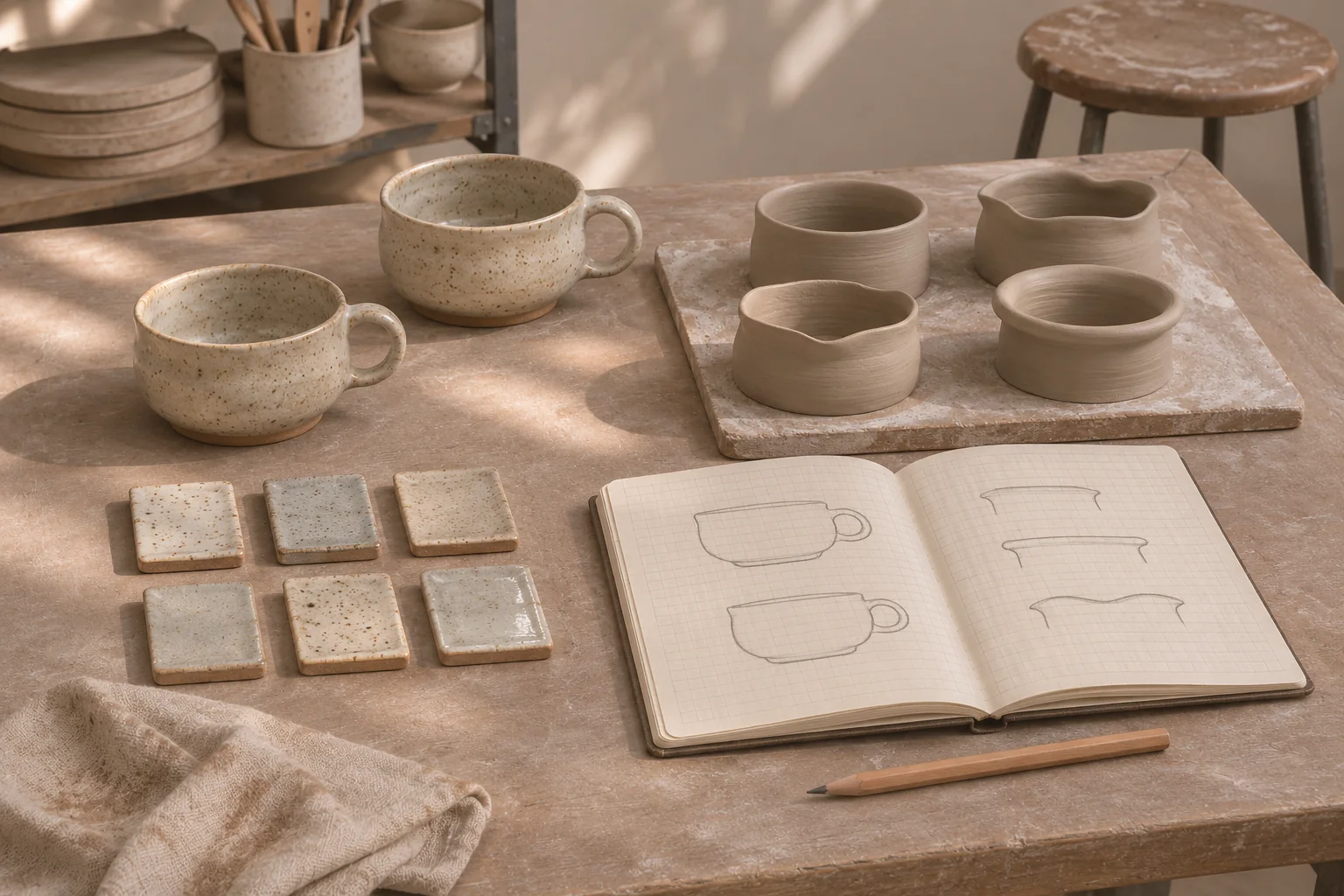
Start with an honest view
of a developing practice.
You do not need a professional portfolio or one consistent personal style. Choose work that makes a decision visible: an observed detail, a changed composition, a material test or a short sequence that becomes clearer in revision.
A rough process page can be as useful as a finished image when it explains a real choice. Keep enough context for a reviewer to distinguish your own contribution from the help, tools or source material around it.
Four programs.
Four ways to prepare.
| Program | Selection | Include |
|---|---|---|
| Studio Art | 10–12 images representing at least 6 works | Include observation, developed work and two process pages. No single medium is required. |
| Ceramics & Material Practices | 10–12 images representing at least 5 works | Include at least two views of three-dimensional work and one labelled process or material test. Clay experience is welcome but not required; other material investigations are acceptable. |
| Photography | 12–15 photographs in one or two sequences | Include a 150–250-word sequence statement and two contact-sheet or editing-process pages. |
| Film & Moving Image | One 3–5-minute film or a 10–12-frame storyboard | A storyboard is a full alternative for applicants without filming access. Add a 250-word role statement and identify collaborators. A film excerpt must include title and credits. |
Theatre, Contemporary Dance and Music & Sound use program-specific auditions. Creative Writing & Literary Arts uses a writing sample. This portfolio guide covers the four visual and moving-image routes above.
Label the work clearly.
What is it?
Give a title, year, medium, dimensions or duration. Short, plain descriptions are more useful than a claim that every piece is important.
What did you do?
State your role. Identify collaborators, sources and tools where relevant. An image made within a group can belong in the selection when your contribution is clear.
What changed?
Add a small number of notes or rough pages showing an edit, trial or revision. Explain the question behind a change rather than every step of a technical process.
Academic records
and creative work.
Prepare a secondary-school completion record or current final-year transcript, plus a 300–500-word statement about a creative question. Transfer applicants add college transcripts and relevant course descriptions. International records may need translations and a grading-scale explanation.
Creative review and transfer-credit evaluation are separate. A strong portfolio does not automatically award course credit, admission or a scholarship. No application fee is included in this admissions cycle.
Your preparation list.
Choose the route and save a local checklist. This tool does not accept files or send an application.
Keep these materials together.
A conversation can help.
Bring a few work samples and one question to a preparation conversation. Ordinary visit windows are Tuesdays and Fridays during teaching weeks, subject to confirmation. The December 5 Open Studios event introduces the campus and the three creative-material routes.