Make your role clear to an intended audience.
Start with one intended audience and a current selection of work. Bring the role you want to explore and two questions about readiness. External opportunities are researched individually, discussed without a guarantee of placement.
An artist statement, work selection or creative CV becomes more useful when it identifies a specific next audience. A small exhibition proposal and a graduate-study application ask for different evidence, even when some of the underlying work is shared.
- Selected-work review and caption editing
- Artist statement and creative CV discussion
- Exhibition and small-publication proposal practice
- Budgeting and authorship-credit exercises
- Further-study material preparation
Bring a selection you can discuss.
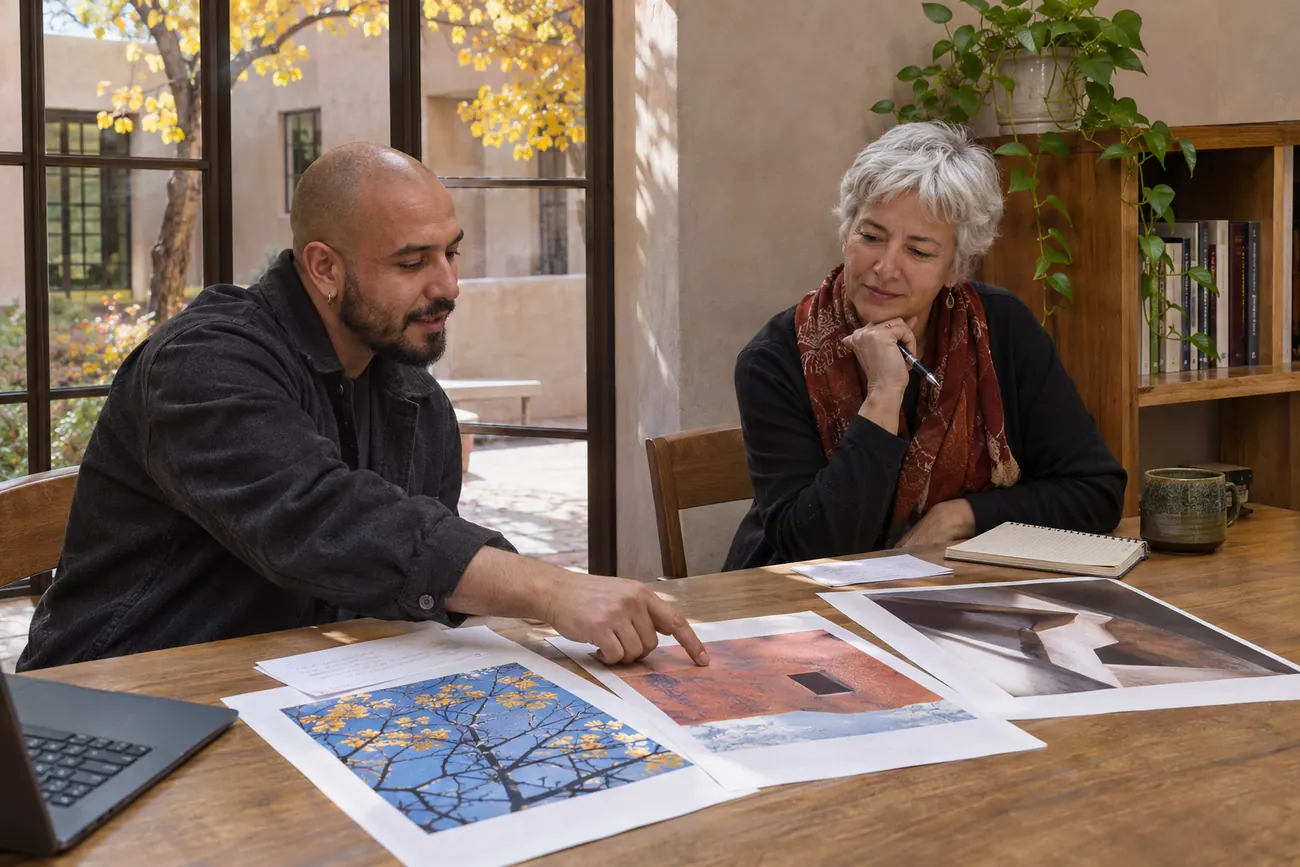
Choose a manageable set of work and label the medium, date and your role. Include one example that changed substantially and a short account of why. The conversation can then identify a missing image, an unclear credit or a practical experience worth seeking next.
The aim is not to turn every practice into the same portfolio style. A performer may use a rehearsal dossier, a photographer a book sequence and a writer an edited manuscript. The clarity of the contribution matters across those different forms.
Practice the work around an opportunity.
Courses and advising can help with a work list, budget, proposal, attribution or editorial record. These are skills a student can use when researching an external opportunity. Any venue, employer or further-study route must be investigated on its own terms.
The college does not guarantee a paid role, income, representation or placement. It does not list invented partner organizations to make a pathway look established. Use the program’s curriculum and your actual work to discuss readiness and the next learning step.
Daniel Okafor
MH 107 · Mesa House
Mon–Fri 09:00–17:00 MT
+1 (505) 555-0162
[email protected]
- Accessibility
- Housing
- Wellbeing referrals
- Commuter support