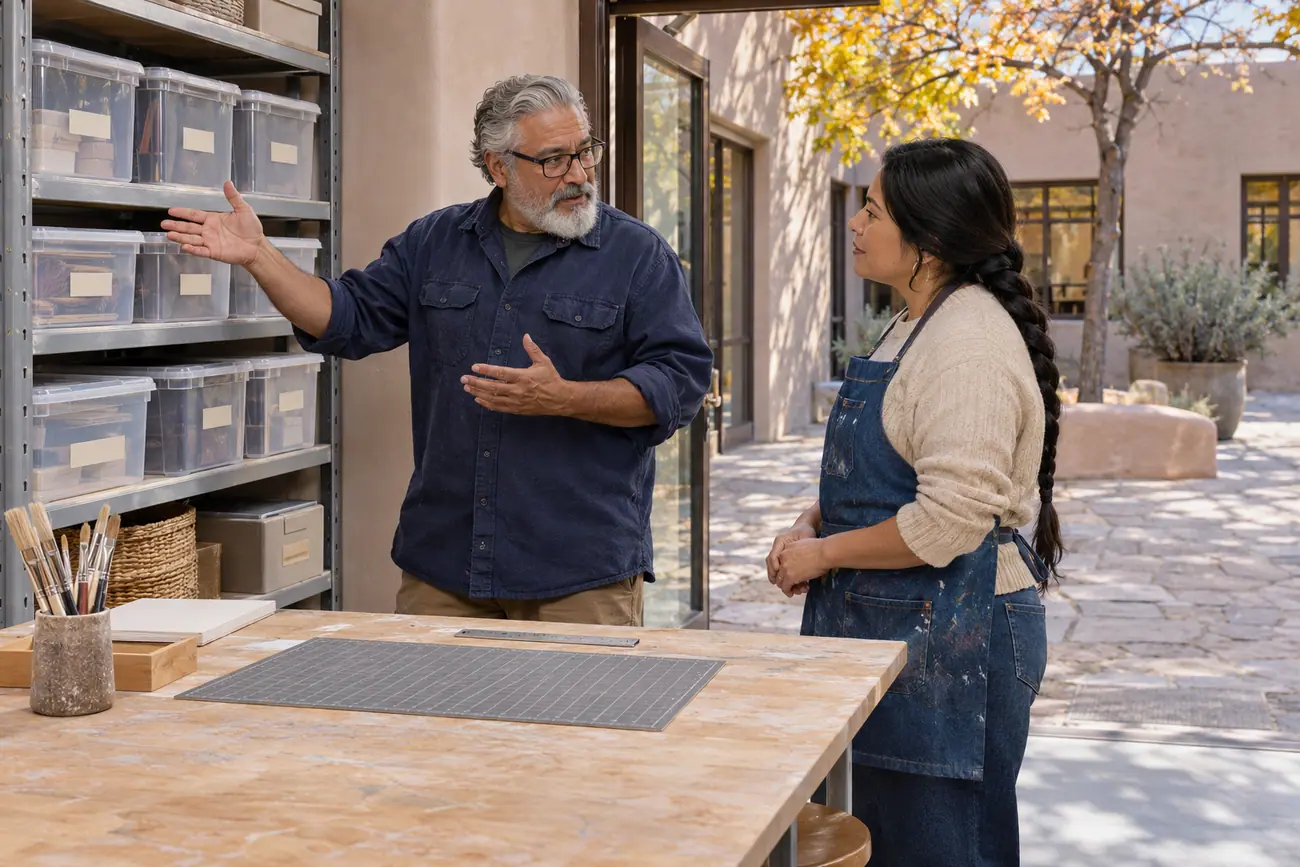
Induction comes before independent use.
Complete space-specific induction before using supervised equipment. Do not use a closed or unstaffed specialist area merely because the larger building is open.
A room can be available while a particular process is not. The kiln room, technical booth and recording resources have their own staff agreements. A public visit or a club meeting is not an induction for supervised equipment.
A shared space has a handover.
Keep materials in labelled approved storage and follow the course’s issued handling instructions. No food in making areas; clear shared work surfaces at the end of a session.
Include clean-up, reset and reporting time within the session. Keep an approved storage label connected to its owner and material, leave clear routes and tell the responsible desk about a concern. A later user should not have to guess which arrangement was intentional.
Movement and listening need practical care.
Agree contact tasks and alternatives; prepare and recover as part of rehearsal. Report a concern to the supervising tutor.
Keep playback at the agreed teaching level, use breaks and discuss hearing-related needs with staff.
Discuss the task and its alternatives with the tutor. This page states the school’s shared-space expectations; detailed operation belongs to the issued course instruction and the appropriate supervised session.
Plan the evening and the return.
Use only approved spaces during posted hours. Student Support coordinates routine concerns; a routine office contact is not a staffed 24-hour emergency service.
Know the approved room hours, the staffed desk’s closing and the journey home before beginning a late session. Routine concerns can be raised with Student Support or the relevant supervising staff. A website draft is not an emergency contact channel.