A shared starting point
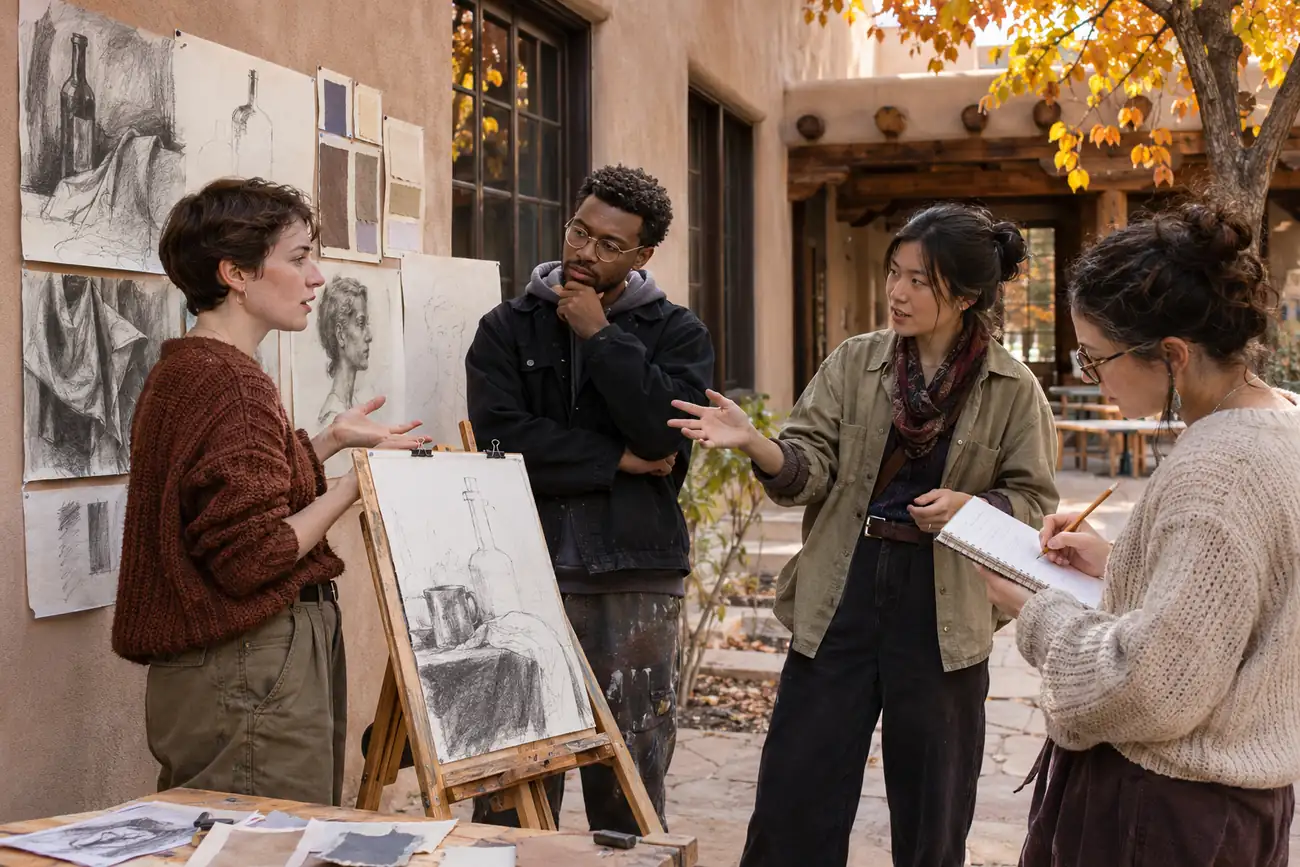
First-year students brought drawings, material tests and unfinished sequences to Arroyo Studios for the first shared critique week of the autumn term. The sessions followed the opening observation assignments in FND 101, Observing & Making. Students were asked to show a decision in progress rather than select only the work that looked most complete. Each table held a notebook beside the work, making the questions behind the objects available to the group.
Description before advice
The discussion began with two minutes of description. Classmates named what they could see, hear or read before asking what the maker intended. Only then did the group offer suggestions. This order helped distinguish a response grounded in the work from an assumption about what an artist ought to make. Tutors recorded a few useful questions on shared sheets, while students kept their own notes about feedback they wanted to test.
A useful next action
One drawing group compared studies of the same courtyard doorway made at different times of day. Another table examined paper forms whose folds changed under side light. In both groups, the discussion became more specific when a student identified the next decision: change a surface, remove a repeated image or test a different scale. The session did not ask a beginning student to settle a permanent artistic identity in the first month.
Returning to the studio
After the discussion, students selected one suggestion to try and one to set aside, then explained both choices in the notebook. The following class returned to those short accounts rather than beginning a new assignment immediately. This made revision visible as part of the course. Amara Lewis coordinated an information table for students who wanted to understand how later work samples are described and prepared for an audience.
Continuing the conversation
The shared critique format will return in the spring foundation sequence with longer projects and more student responsibility. Students can use Folio Library’s writing tables to turn rough discussion notes into an artist statement or process record. The foundation pages explain how the first year connects observation, materials, sequence and presentation. Students who need an alternative way to participate can discuss access needs with Student Support before a session.
Keeping feedback usable
Students can bring one unresolved question to a later advising meeting instead of trying to apply every suggestion at once. The notebook should identify the work discussed, the observation that prompted a change and the next test the maker intends to perform. Keeping an earlier version matters: it allows the student and tutor to compare a real decision over time. The exercise is not scored by the number of comments received, and a student may explain why a suggestion does not fit the question being pursued.