Writing & Critical Studies
Creative Writing & Literary Arts, BA
Build an attentive writing practice through reading, workshop exchange, revision and literary editing.
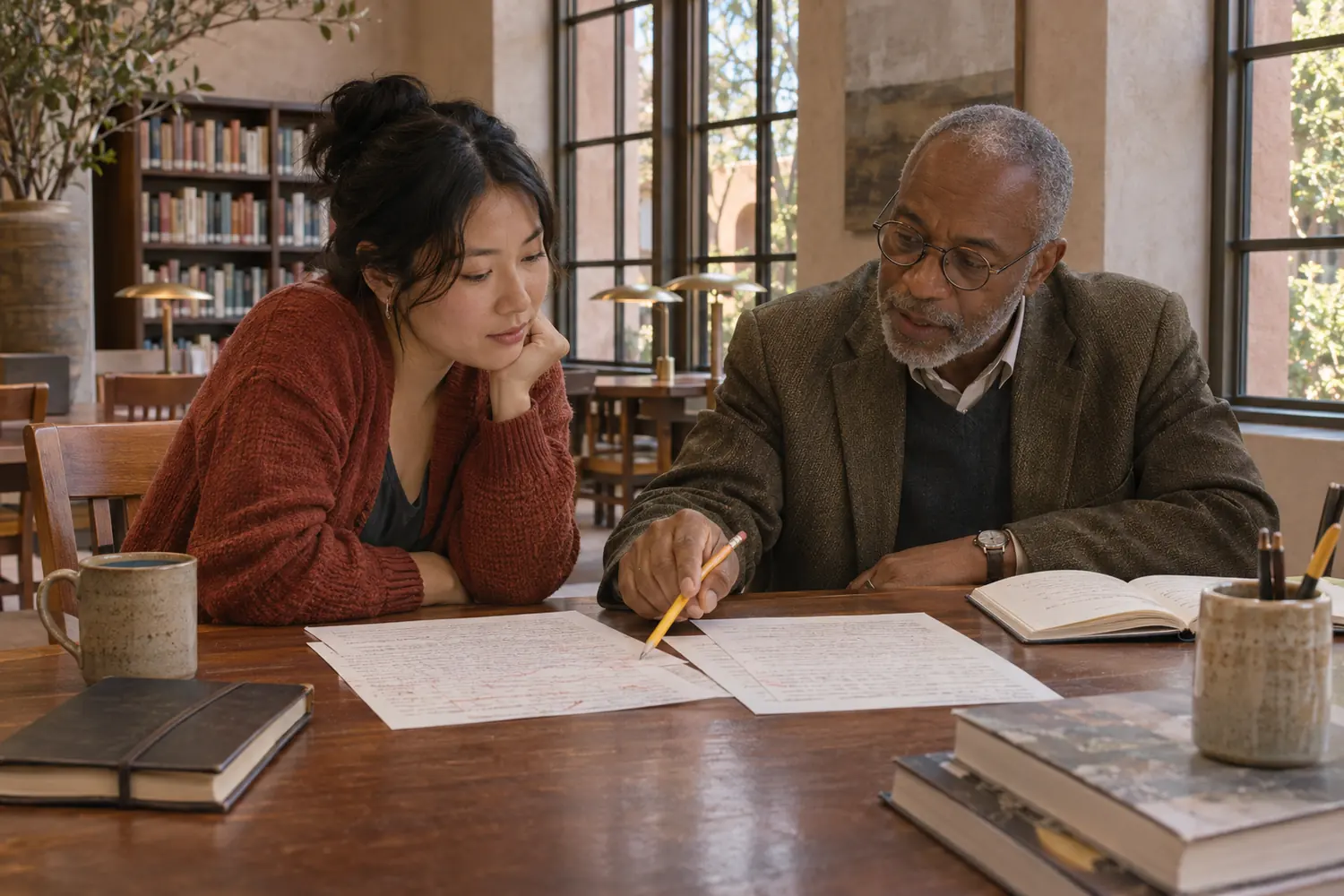
Make language hold a little more.
An observed object, a remembered place or an unfamiliar voice can start a piece of writing. Reading and workshop exchange help you see how the work is taking form. Revision extends beyond correcting a sentence to the structure, arrangement and intended reader of a manuscript.
The program values a sustained practice: prepare the work, bring a specific question to discussion, compare versions and preserve a useful record of the choices made. Contextual seminars and shared courses give the work a broader set of references without replacing its practical demands.
What you will learn.
01Make deliberate choices of voice, viewpoint and structure.
02Read literary work with attention to craft and context.
03Offer useful editorial feedback grounded in a text.
04Revise through drafts with a clear account of changes.
05Prepare a manuscript or small publication with consistent editorial practice.
The practice across four years.
Year 1
Writing and Observation: write a place twice through different points of view. Voice and Form: compare one subject in poetry and short prose.
Year 2
Fiction and Poetry Workshop: revise a fiction or poetry sequence from workshop notes. Narrative and Essay Workshop: develop a narrative essay with a clear source practice.
Year 3
Manuscript Development: shape a connected manuscript from selected drafts. Literary Editing Workshop: edit a small publication with author correspondence.
Year 4
Senior Manuscript Seminar: propose a final manuscript and a revision schedule. Senior Literary Presentation: present selected work with an editorial and reflective statement.
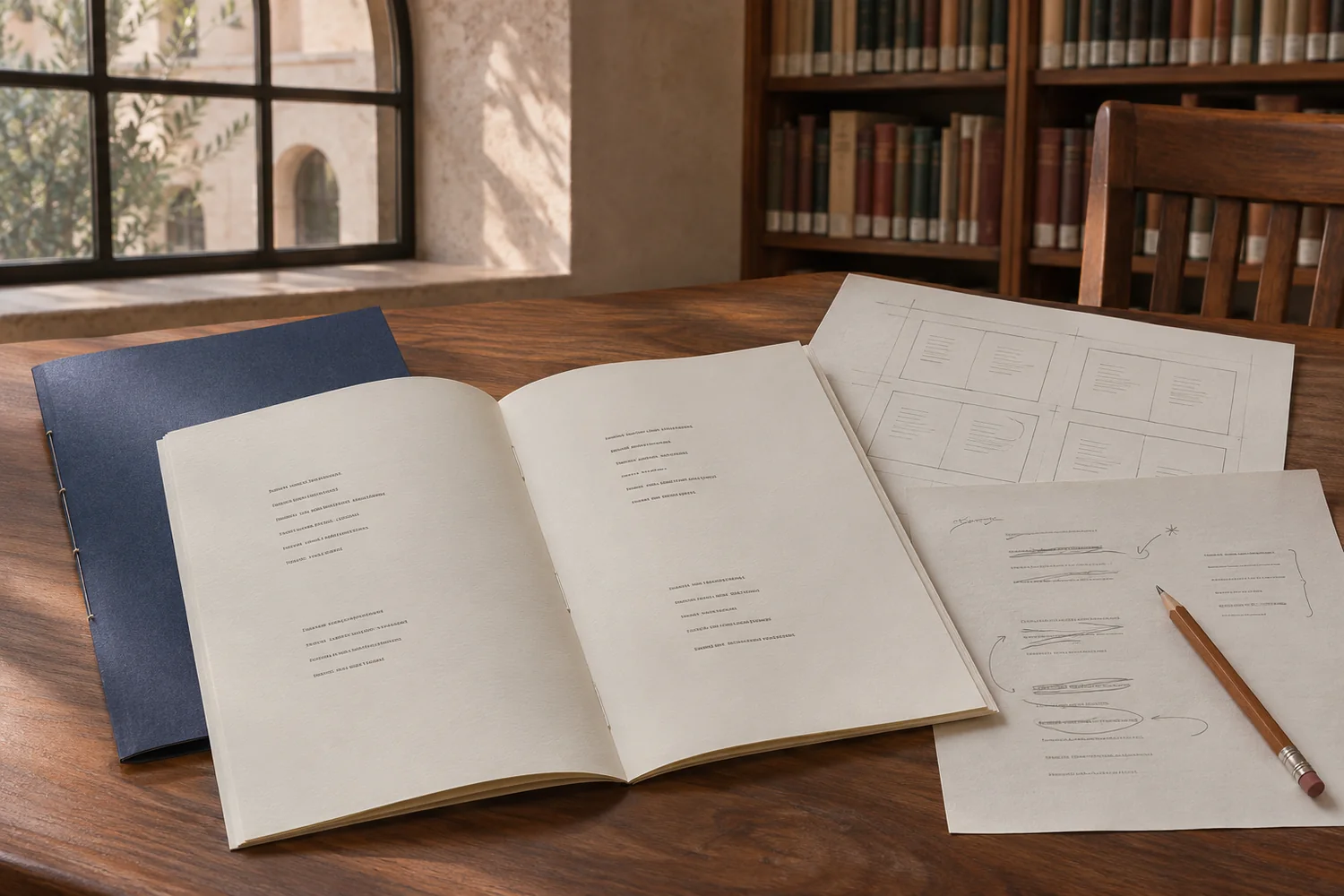
Your curriculum, made visible.
48Major
12Foundation
36General Education
24Free Elective
The degree requires 120 semester credits. Major, foundation, contextual and elective requirements are counted separately, and a course earns degree credit once.
WRIT 101Writing and Observation
Write a place twice through different points of view. Short observational prose and poems develop attention to detail, voice and implication. A notebook records how one subject changes when the writer changes viewpoint.
Read the catalog entryWRIT 102Voice and Form
Compare one subject in poetry and short prose. Students explore sentence, line, image and arrangement through linked exercises. Workshop discussion identifies a specific craft decision that can be tested in a new draft.
Read the catalog entryWRIT 201Fiction and Poetry Workshop
Revise a fiction or poetry sequence from workshop notes. A sustained workshop connects close reading to original fiction or poetry. Students revise selected work through an account of what peer responses reveal and what remains intentional.
Read the catalog entryWRIT 202Narrative and Essay Workshop
Develop a narrative essay with a clear source practice. Students develop narrative and essay forms with attention to structure, evidence and source practice. Draft comparisons trace changes of order, point of view and emphasis.
Read the catalog entryWRIT 301Manuscript Development
Shape a connected manuscript from selected drafts. A connected manuscript is developed from a focused selection of drafts. The course considers the relation between an individual piece and the larger sequence a reader encounters.
Read the catalog entryWRIT 302Literary Editing Workshop
Edit a small publication with author correspondence. Students work as writers and editors on a small original publication. Correspondence, version control and clear distinctions between structural and copyediting decisions support the collaboration.
Read the catalog entryWRIT 401Senior Manuscript Seminar
Propose a final manuscript and a revision schedule. The senior seminar shapes a final manuscript proposal, work schedule and selected opening material. A review tests coherence, scope and the writer’s account of the revision still required.
Read the catalog entryWRIT 402Senior Literary Presentation
Present selected work with an editorial and reflective statement. Students present a selected manuscript or publication with editorial credits and a reflective commentary. Assessment considers craft, revision and the clarity of the intended reader’s experience.
Read the catalog entryWRIT 141Reading as a Writer
Students read prose and poetry for decisions of sentence, voice, image and arrangement. Short responses connect a noticed technique to an experiment in original writing.
Read the catalog entryWRIT 241Forms and Revision
Students compare drafts to understand what a change of form can accomplish. The seminar examines cuts, rearrangement and changes of viewpoint through specific passages.
Read the catalog entryWRIT 341The Editorial Conversation
Students practice asking a writer a useful question and distinguishing copyediting from developmental response. Editorial correspondence makes the author’s decision and the editor’s role clear.
Read the catalog entryWRIT 441Literary Publication Seminar
Students prepare a modest original literary publication with a work list, page order, permissions, credits and style sheet. Publication is treated as a sequence of editorial decisions rather than a decorative finish.
Read the catalog entryEight semesters of developing work.
Full-time tuition covers 12–18 credits per semester. The BA/BFA sample plans carry 15 credits per term; the BMus plan carries 15–18 credits, including one 17-credit term. These are sample sequences, not promises of individual registration.
Year 1 · Spring
15 creditsYear 2 · Fall
15 creditsYear 2 · Spring
15 creditsYear 3 · Fall
15 creditsYear 3 · Spring
15 creditsYear 4 · Fall
15 creditsYear 4 · Spring
15 creditsSample plans name a feasible elective for every slot. Approved alternatives must match credits, prerequisites and seasonal availability and cannot duplicate a completed course. Open-context seminars numbered 141 are available across majors; higher seminars require the preceding seminar.
A student question in practice.
How can a recurring ordinary object hold together stories about different ideas of home?
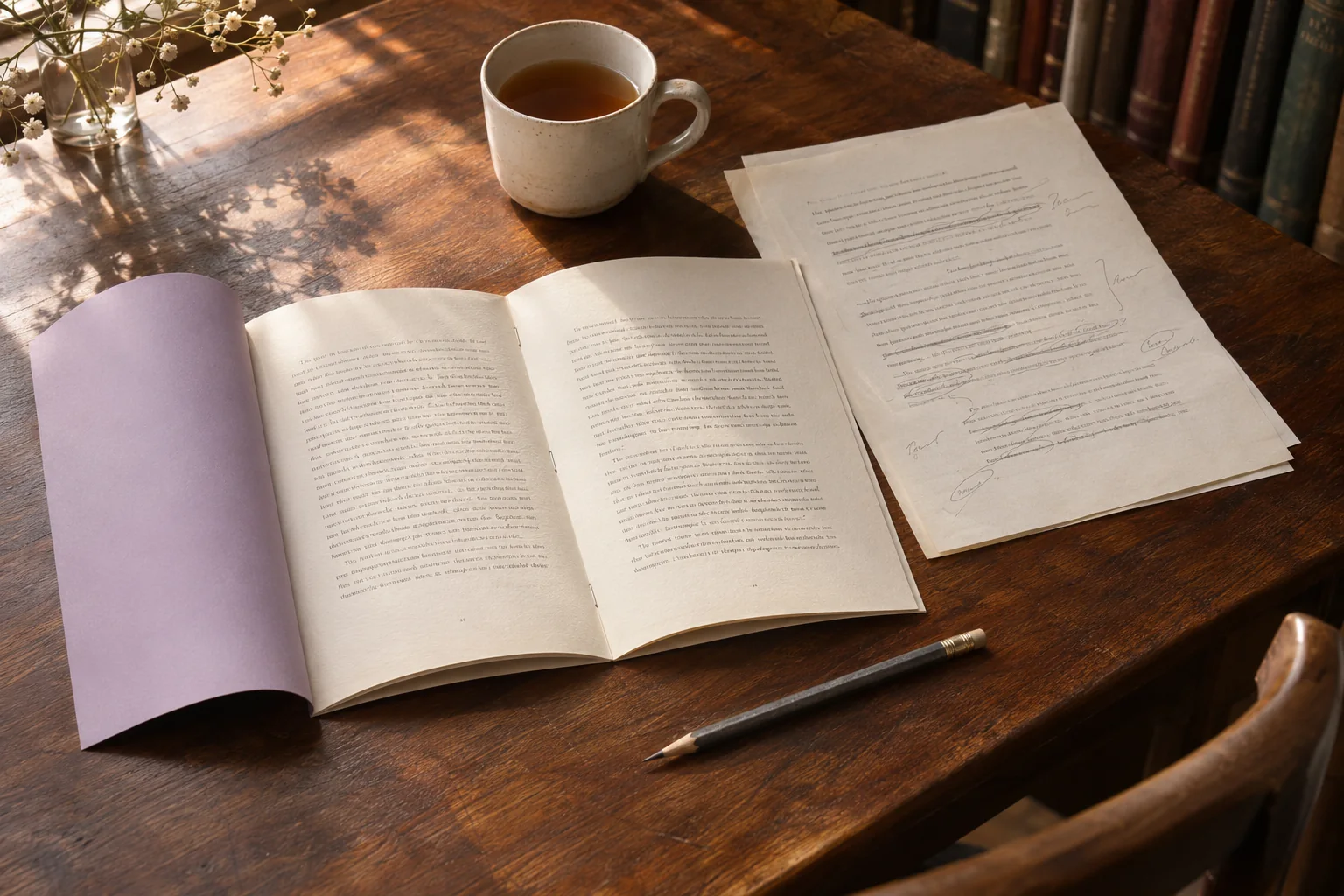
A final presentation with a record.
An original manuscript or edited literary publication and a revision commentary.
The final review considers both the presented work and its development. Credit, contextual research and an honest account of your role belong beside the work. Writing and editing; publication assistance; literary programming; graduate writing study. Individual advising helps connect the next goal to a relevant selection of work and experience; it does not guarantee an outcome.
Preparing to begin.
Follow the writing guidance for this program. Review considers preparation and the ability to develop through feedback; a professional production or previous publication is not expected. Academic records and creative materials are reviewed together, while transfer-credit equivalence is evaluated separately.