A Room for Three
How does a familiar scene change when the performers disagree about who owns the room?
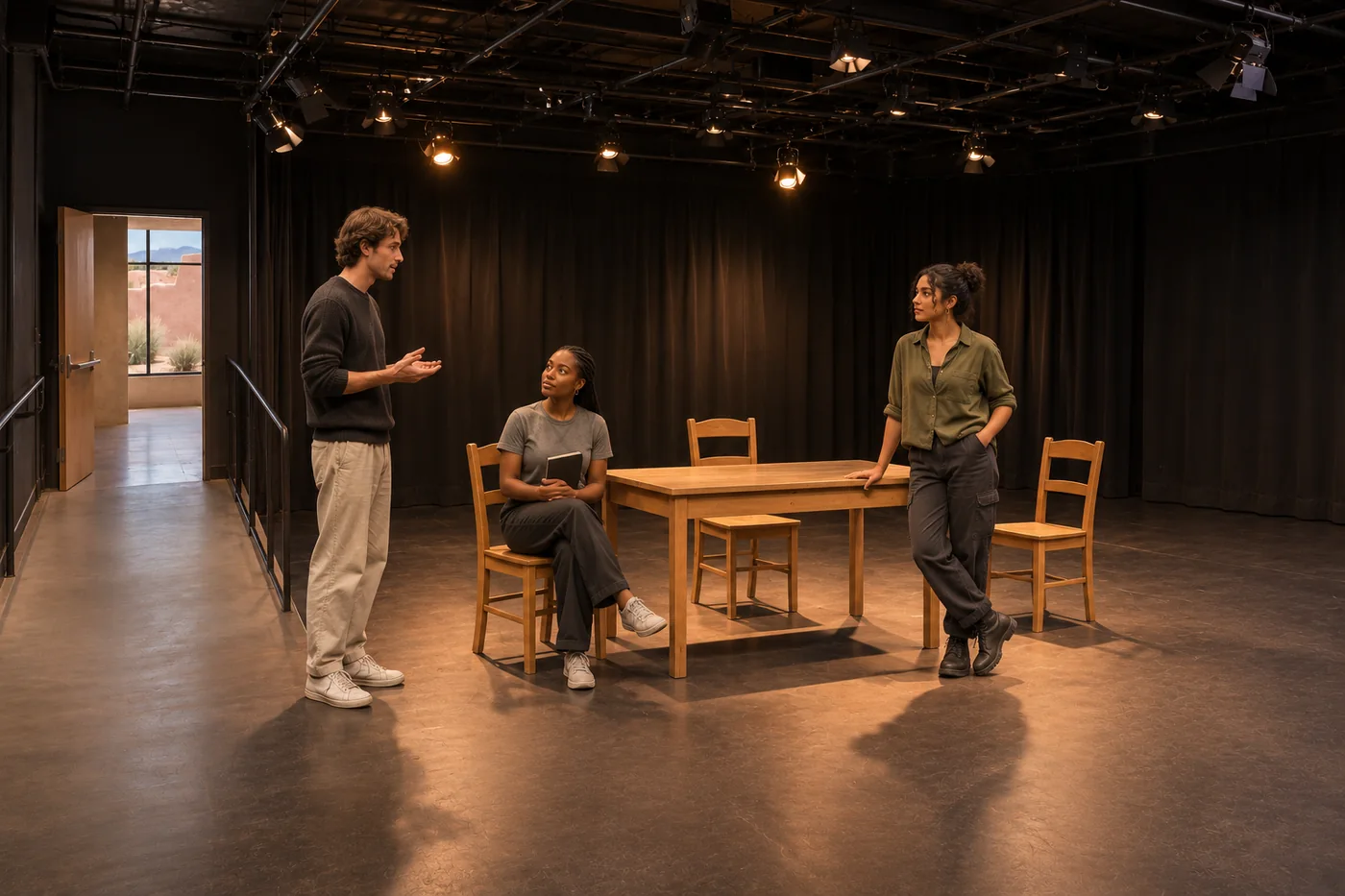
Where the work began.
Tessa developed a short original scene for three performers and a table. Each character enters believing the meeting has a different purpose. The first rehearsal focused on the text, but later sessions asked the performers to describe the action they were trying to change in one another.
Trials and revision.
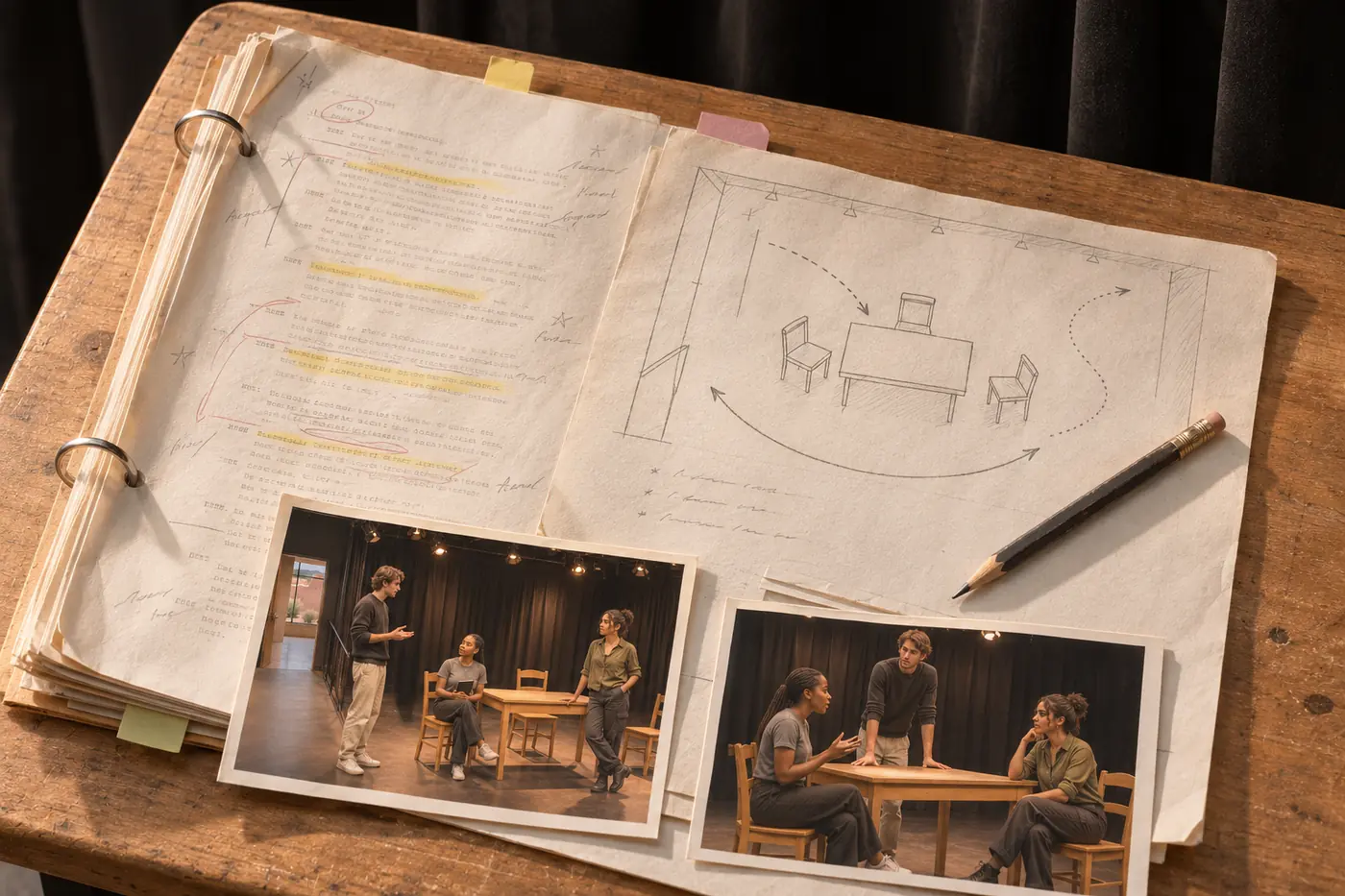
The group tried the same scene with three arrangements of the table and audience. Moving the chairs exposed gestures that had been hidden, while placing the audience too close made the quieter exchanges feel forced. Rehearsal notes separate a performer’s observation from a directing decision, so the record shows how choices were made.
A work, presented.
The final presentation uses a limited lighting state and clearly assigned backstage roles. A diagram marks the audience route, seating positions and entry points. The program includes an introduction to the piece and credits the ensemble’s contributions to its development.
The next question.
The review considers the performance together with its rehearsal dossier. Tessa is interested in how a modest production can carry a precise question through text, space and ensemble behavior, without relying on an elaborate set. The dossier includes a before-and-after blocking diagram and a short note from each performer about one changed action. Those notes are credited separately from Tessa’s directing account. Comparing them keeps the project from appearing to be the result of a single untested idea, while a simple technical list allows another group to understand the practical scale of the presentation.
Follow the study behind the work.
A course project is one point in a longer practice. The program page connects this work to the learning sequence, the shared space and the kind of final presentation students develop in the senior year.