One location, several versions
A courtyard between Mesa House and Northlight Media Center became the starting point for a narrative production exercise this autumn. Students in Film & Moving Image were asked to plan a short work around a location they could return to, rather than build a script that depended on many rooms or a large crew. The assignment put practical observation beside writing: when the light changed, which door carried sound and how a performer could enter the frame.
Planning before shooting
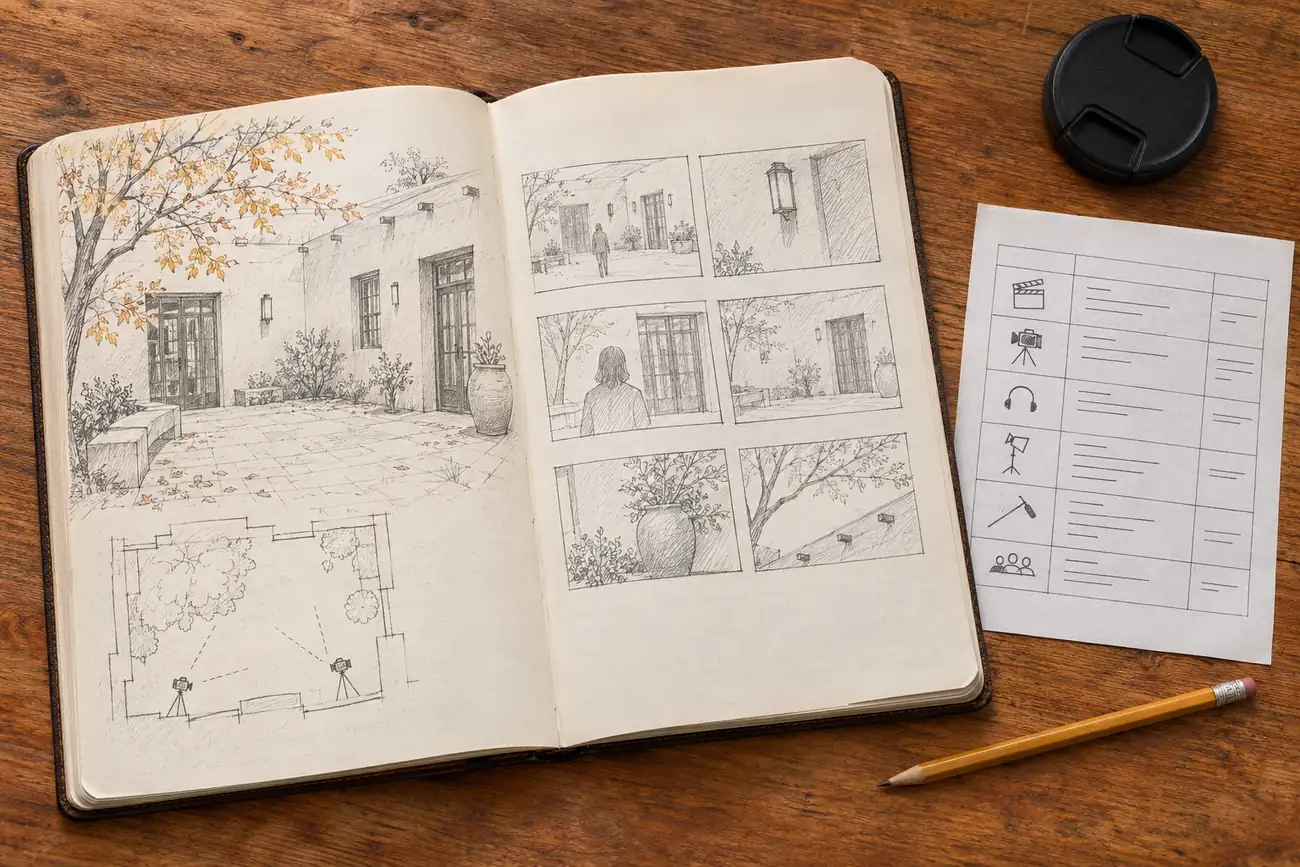
Samir Patel’s project, The Last Courtyard, uses two students returning to the same place over one afternoon. The production notebook contains a location sketch, a five-shot trial and a role list identifying the writer, performers, camera operator and sound recordist. Theo Bennett reviewed the plans with the group before the crew recorded the larger scene. Permissions and the location schedule were treated as part of the work rather than paperwork added after filming.
What the edit revealed
The first edit made a character’s explanation more prominent than the action that preceded it. In a classroom viewing, students could describe the pause at the doorway before they remembered the explanatory line. Patel tested a version without the line and compared the effect on the second visit to the courtyard. The notebook records why that change was made, including what became less clear and what the image could now carry on its own.
Sound has its own notes
The group recorded room tone and a small set of location sounds with the same attention given to picture. Files were labelled before editing, and the source list distinguishes a production recording from a sound made later in the teaching suite. No private conversation was used as background material. A short account of the sound transition now sits beside the selected stills and the revised scene outline.
Making a process readable
The Student Work case study follows the project through stills, a storyboard and production decisions. Its image sequence identifies the doorway, the pause and the return to the same location, allowing a reader to compare the film’s changing point of view. Students comparing the account with their own plans can use the course catalog to follow the progression from shot and scene exercises to senior preproduction and completion.
The work between versions
The notebook also tracks what changed between the shooting plan and the edit. A delayed setup, a sound problem or a performance discovery can alter a scene without becoming a failure of the entire project. Students identify which changes were chosen and which followed practical limits, then consider whether the finished sequence communicates those decisions. This record gives a later crew something useful to learn from and helps separate the director’s individual contribution from the coordinated work of performers and production collaborators.