Film & Performing Arts
Film & Moving Image, BFA
Build short moving-image work through writing, small-crew production, editing and careful sound decisions.
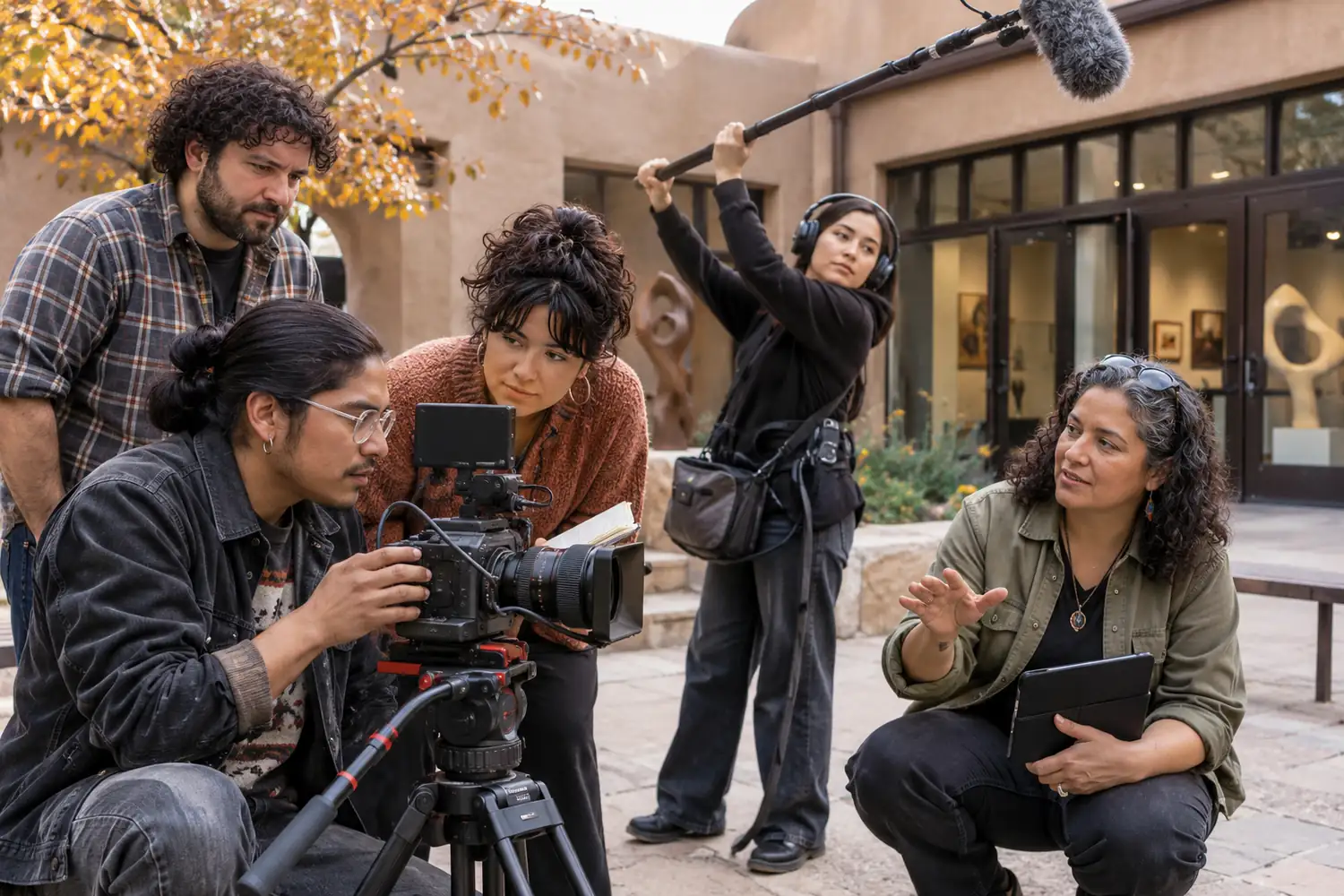
A scene becomes a way of seeing.
A short film can begin with one location and a precise change of action. The course sequence connects camera, performance, editing and sound through practical small-crew work. You will learn to plan a feasible production, keep its sources organized and test what a viewer can understand from the work itself.
The program values a sustained practice: prepare the work, bring a specific question to discussion, compare versions and preserve a useful record of the choices made. Contextual seminars and shared courses give the work a broader set of references without replacing its practical demands.
What you will learn.
01Translate a narrative question into a practical short-film plan.
02Work responsibly within a small production crew.
03Record and organize picture and sound material.
04Revise an edit using specific viewer feedback.
05Present a film with credits and production documentation.
The practice across four years.
Year 1
Shot and Scene Studio: tell a short scene in five shots. Small-Crew Production Studio: plan and record a two-person scene with rotating crew roles.
Year 2
Sound and Picture Studio: record dialogue and build a synchronized scene. Editing the Short Film: compare two edits made from the same footage.
Year 3
Narrative Production Studio: produce a short narrative within a fixed location plan. Moving-Image Inquiry: develop a moving-image study beyond conventional narrative.
Year 4
Senior Film Preproduction: complete a script, schedule and permissions record. Senior Film Completion: complete a short film with credits and a reflective production notebook.
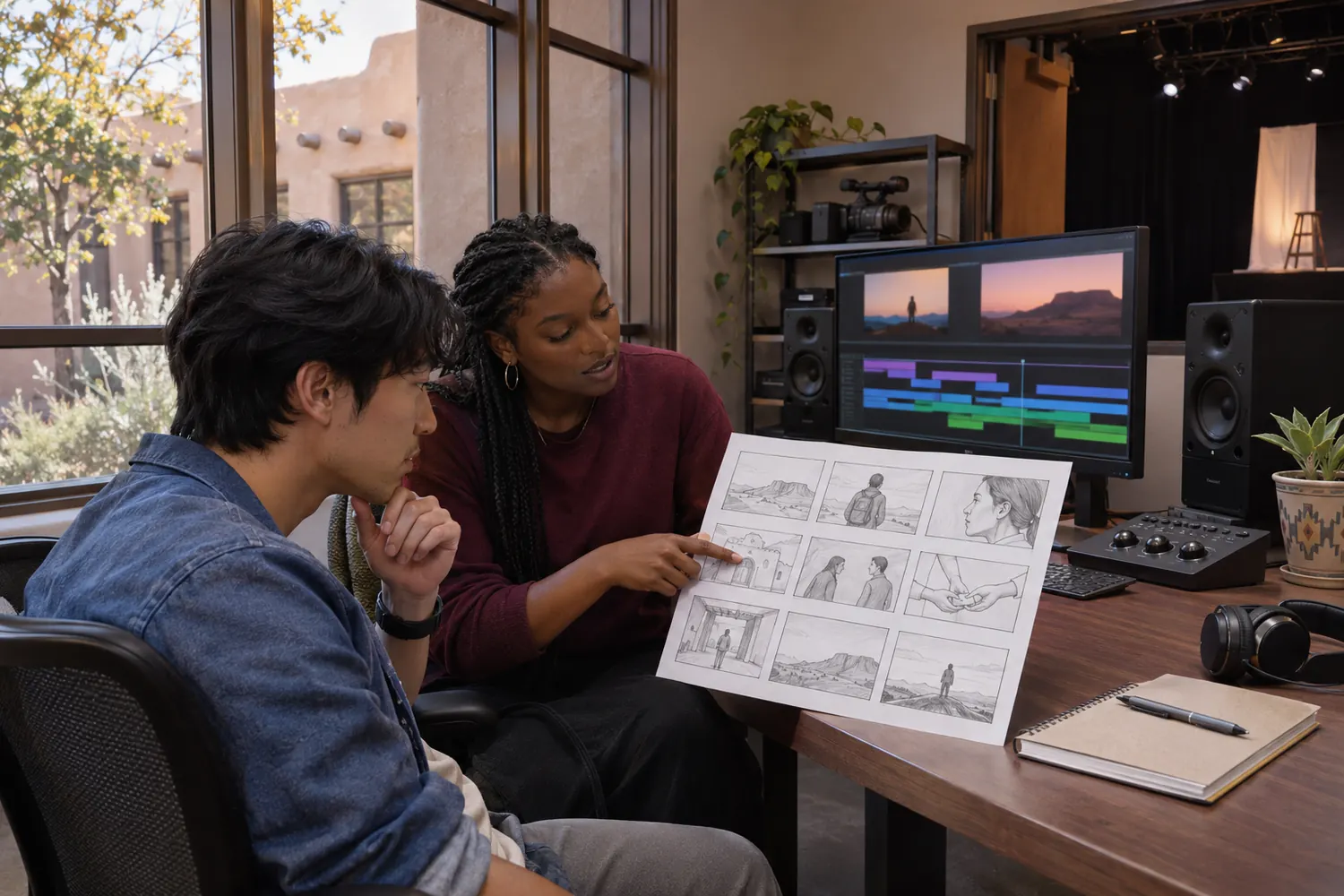
Your curriculum, made visible.
60Major
18Foundation
30General Education
12Free Elective
The degree requires 120 semester credits. Major, foundation, contextual and elective requirements are counted separately, and a course earns degree credit once.
FILM 101Shot and Scene Studio
Tell a short scene in five shots. Camera position, duration and off-screen space are tested in short exercises. Students compare what a shot implies with what the next shot actually reveals.
Read the catalog entryFILM 102Small-Crew Production Studio
Plan and record a two-person scene with rotating crew roles. Students rotate through camera, sound and production roles in a limited-location exercise. Preparation, file organization and an accurate credit list are included in assessment.
Read the catalog entryFILM 201Sound and Picture Studio
Record dialogue and build a synchronized scene. Dialogue, atmosphere and visual continuity are developed together. Students record limited tests, label sources and identify which recording problems can be addressed before the edit.
Read the catalog entryFILM 202Editing the Short Film
Compare two edits made from the same footage. Two versions of a scene are cut from a shared set of material. Pacing, information and sound transition are compared through documented viewing responses.
Read the catalog entryFILM 301Narrative Production Studio
Produce a short narrative within a fixed location plan. A short narrative moves from script and production plan through shooting and revision. The scope is limited so that students can examine a meaningful change between versions.
Read the catalog entryFILM 302Moving-Image Inquiry
Develop a moving-image study beyond conventional narrative. Students test a formal question through moving image rather than begin with a conventional story requirement. Research and trials explain the relation between the chosen structure and viewing experience.
Read the catalog entryFILM 401Senior Film Preproduction
Complete a script, schedule and permissions record. Students complete a feasible script or treatment, roles, schedule, location agreement and technical tests. The proposal must identify authorship and the practical resources needed for completion.
Read the catalog entryFILM 402Senior Film Completion
Complete a short film with credits and a reflective production notebook. The final phase integrates editing, sound, credits and presentation. Selected stills and production notes make the contribution of each collaborator clear in the review dossier.
Read the catalog entryFILM 141Film Forms and Contexts
Students compare selected film scenes through shot duration, off-screen space, narrative order and sound. Close analysis explains how a decision works without requiring imitation of a filmmaker’s style.
Read the catalog entryFILM 241Production Planning Seminar
Students turn a short-film proposal into a realistic production plan. Location access, roles, permissions, shooting order and contingency time are considered within limited resources.
Read the catalog entryFILM 341Editing and Audience Seminar
Students compare audience responses to alternative edits. The seminar separates a useful observation about comprehension or rhythm from an instruction to make all viewers respond alike.
Read the catalog entryFILM 441Credits and Distribution Contexts
Students prepare accurate authorship credits, release-context notes and a realistic presentation plan. Discussion distinguishes classroom screening, public sharing and a separately researched distribution opportunity.
Read the catalog entryEight semesters of developing work.
Full-time tuition covers 12–18 credits per semester. The BA/BFA sample plans carry 15 credits per term; the BMus plan carries 15–18 credits, including one 17-credit term. These are sample sequences, not promises of individual registration.
Year 1 · Spring
15 creditsYear 2 · Fall
15 creditsYear 2 · Spring
15 creditsYear 3 · Fall
15 creditsYear 3 · Spring
15 creditsYear 4 · Fall
15 creditsYear 4 · Spring
15 creditsSample plans name a feasible elective for every slot. Approved alternatives must match credits, prerequisites and seasonal availability and cannot duplicate a completed course. Open-context seminars numbered 141 are available across majors; higher seminars require the preceding seminar.
A student question in practice.
How much can a film reveal through the changing use of one shared place?
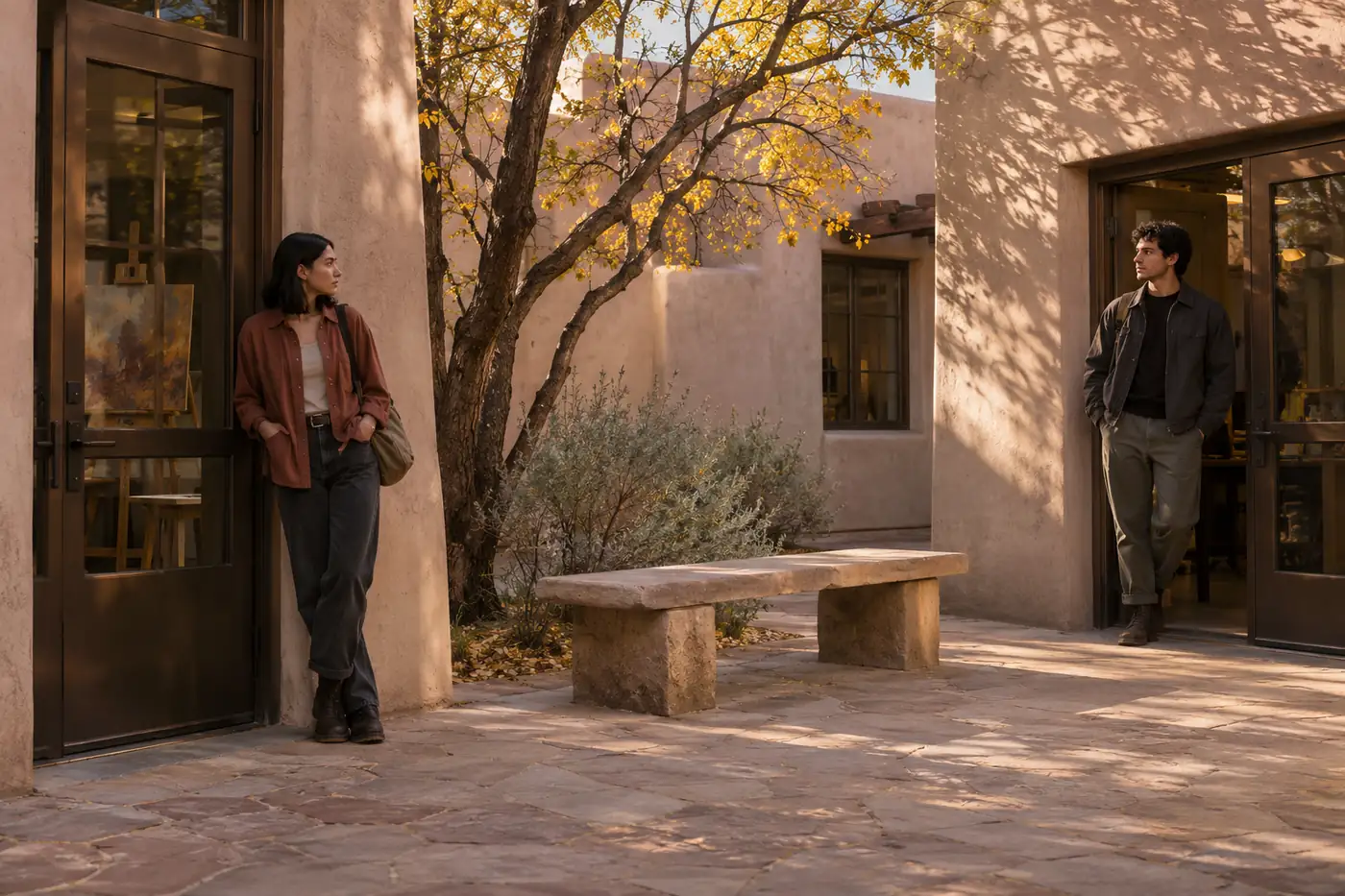
A final presentation with a record.
A completed short film, selected stills and a production notebook.
The final review considers both the presented work and its development. Credit, contextual research and an honest account of your role belong beside the work. Production assistant; editing assistant; independent filmmaking; graduate film study. Individual advising helps connect the next goal to a relevant selection of work and experience; it does not guarantee an outcome.
Preparing to begin.
Follow the portfolio guidance for this program. Review considers preparation and the ability to develop through feedback; a professional production or previous publication is not expected. Academic records and creative materials are reviewed together, while transfer-credit equivalence is evaluated separately.