Listening before arranging
Students in Advanced Ensemble Studio used an ordinary threshold as the subject for a recent listening exercise. The task began without a recorder: students noted changes of distance, rhythm and room tone as a door opened or closed. Only after those observations did they propose a short recording or musical response. The sequence made listening a choice within the composition process rather than a passive check at the end.
A modest source collection
Avery Santos recorded a small collection near three campus doorways, documenting location, time and permission context. Conversations and identifiable private material were excluded. The collection included a hinge, footfalls, the changing tone of a room and distant rehearsal. The source log records why a sound was kept as well as why another was removed, giving the later arrangement a clear relationship to its starting material.
From interval to form
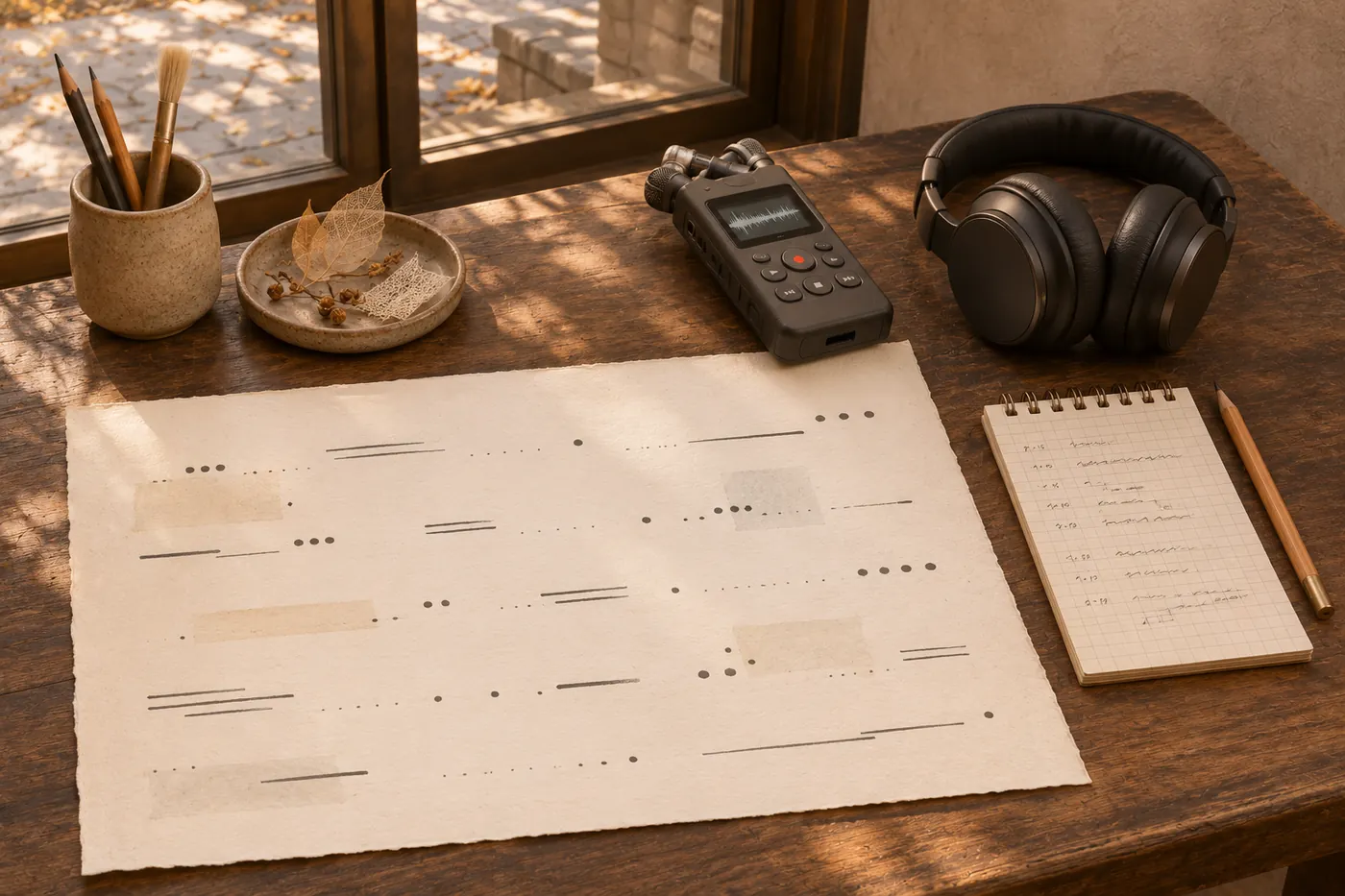
Avery translated repeated intervals into a graphic score and tested two versions with classmates in Resonance Rooms. One version layered the material densely. The second allowed longer pauses and fewer simultaneous sounds. Responses suggested that the quieter version made the boundary between room and courtyard easier to follow. Naomi Ellis asked the group to explain that choice through specific moments rather than describe one version as simply more successful.
A place for a listener
The developing installation plan includes a seating point, a limited playback level and a marked route around the equipment. Cable positions and listening duration are part of the proposal. A source-credit panel distinguishes captured campus sound from later musical additions. These small practical decisions help another person understand how to encounter the work without making the installation depend on a long spoken explanation from its maker.
Keeping the process available
The Student Work case study presents a graphic score, a listening map and an account of the revisions. The records connect intervals and source choices to the position of a listener, keeping a compositional question available for discussion after the installation has been removed. The Music & Sound page describes the broader curriculum in musicianship, ensemble work, composition and recording. Students with equipment questions should use the scheduled desk or discuss the project with their course tutor.
A recording is not the whole place
The exercise ended with students comparing their recordings with the notes made before a microphone was used. Some changes of distance were less apparent on playback; another small sound became unexpectedly prominent. Rather than treat one version as the true account, the group identified the listening position and equipment choices behind each result. That comparison helped explain why a score or installation plan needs an audience context. It also kept the source log useful as a record of decisions instead of a simple inventory of files.