Film & Performing Arts
Music & Sound, BMus
Connect listening, musicianship, composition and recording in an evolving practice of music and sound.
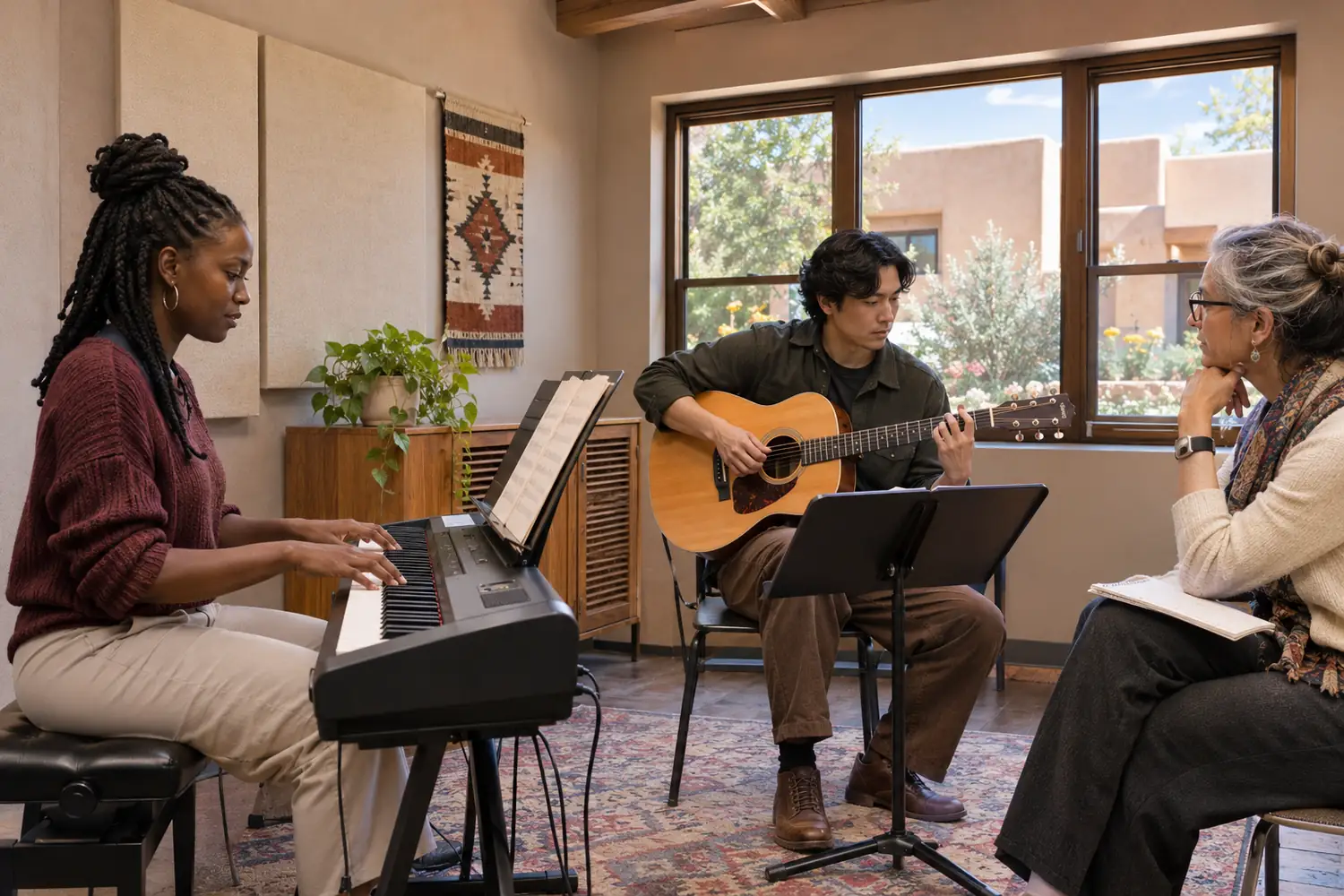
Listen closely. Then shape what comes next.
Musicianship, ensemble rehearsal, composition and recording inform one another across this degree. A musical phrase or ordinary environmental sound can begin an investigation, but selection, form and the listener’s encounter turn the collection into a developed work.
The program values a sustained practice: prepare the work, bring a specific question to discussion, compare versions and preserve a useful record of the choices made. Contextual seminars and shared courses give the work a broader set of references without replacing its practical demands.
What you will learn.
01Read, hear and describe musical relationships.
02Contribute prepared parts and attentive listening to ensemble work.
03Develop a composition through rehearsal and revision.
04Record and edit sound with clear consent and credits.
05Present a recital, composition or sound installation with a critical record.
The practice across four years.
Year 1
Musicianship and Listening Studio: notate and perform a short pattern by ear and from score. Ensemble and Notation Studio: prepare an ensemble part and document rehearsal choices.
Year 2
Composition and Recording Studio: compose a short work and make a supervised recording. Arrangement and Production Studio: compare arrangements through recorded listening tests.
Year 3
Advanced Ensemble Studio: develop an extended ensemble or solo study. Sound and Composition Research: investigate a question through musical or environmental sound.
Year 4
Senior Music Proposal: propose a recital, composition or installation with technical needs. Senior Music and Sound Presentation: present the final work with scores, credits and a listening account.
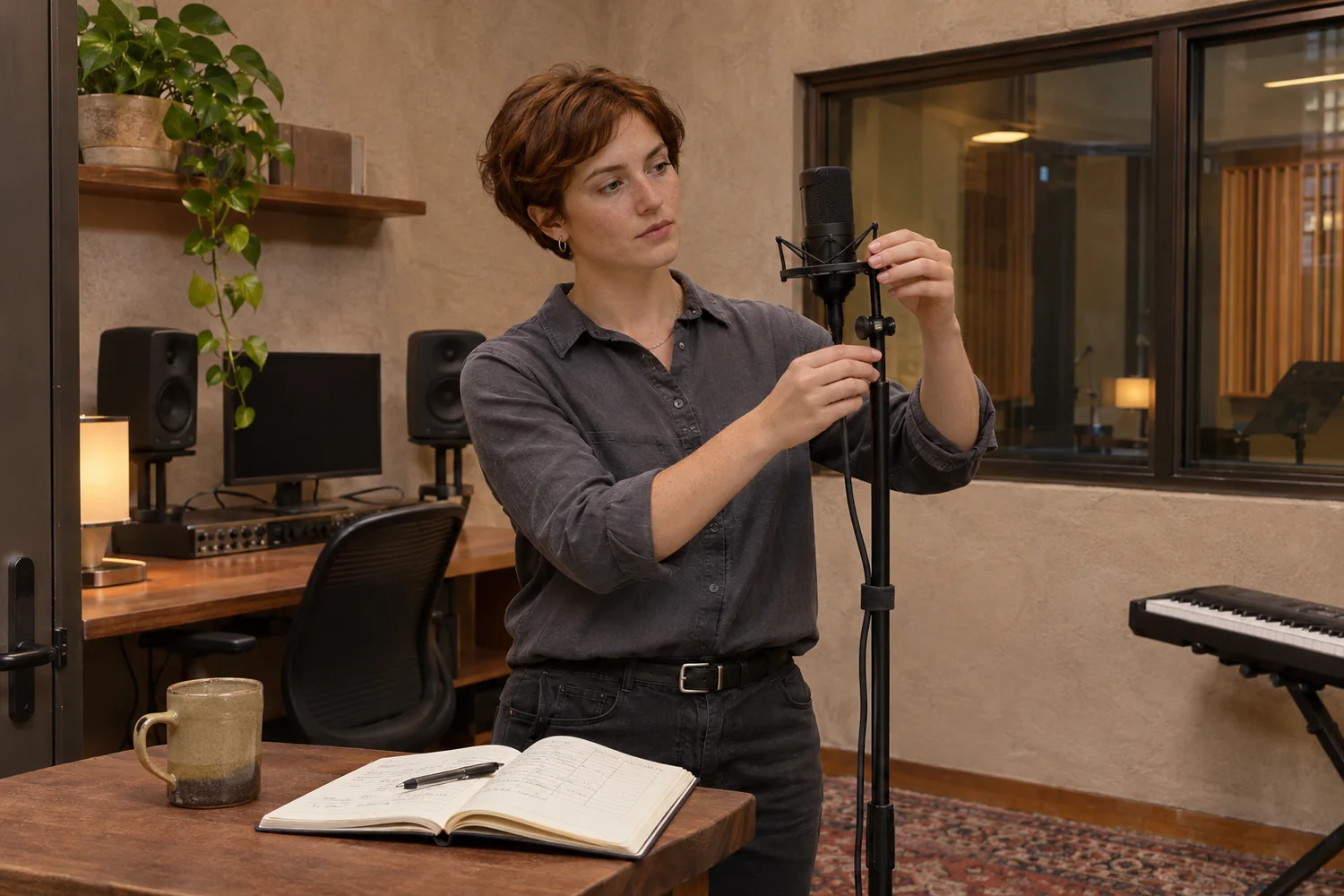
Your curriculum, made visible.
60Major
20Foundation
36General Education
12Free Elective
The degree requires 128 semester credits. Major, foundation, contextual and elective requirements are counted separately, and a course earns degree credit once.
MUS 101Musicianship and Listening Studio
Notate and perform a short pattern by ear and from score. Students connect hearing, notation and performance through short musical patterns. Individual preparation supports shared listening and a record of the choices made in a small group.
Read the catalog entryMUS 102Ensemble and Notation Studio
Prepare an ensemble part and document rehearsal choices. Ensemble parts are read, rehearsed and revised in relation to the whole. Students compare notation, sound and the practical communication needed for a group to work together.
Read the catalog entryMUS 201Composition and Recording Studio
Compose a short work and make a supervised recording. Original musical ideas are developed through a small composition and supervised recording. The course connects a written or graphic score to performers, room and source records.
Read the catalog entryMUS 202Arrangement and Production Studio
Compare arrangements through recorded listening tests. Students arrange a short work and compare recorded versions. Balance, pacing and the relationship between musical layers are discussed through specific listening evidence.
Read the catalog entryMUS 301Advanced Ensemble Studio
Develop an extended ensemble or solo study. An extended ensemble or solo study is prepared through rehearsals and recorded reflection. Students take responsibility for a part while explaining its contribution to the larger form.
Read the catalog entryMUS 302Sound and Composition Research
Investigate a question through musical or environmental sound. A focused musical or sound question is explored through original trials and contextual listening. Source records and revision notes make the difference between capture, composition and arrangement clear.
Read the catalog entryMUS 401Senior Music Proposal
Propose a recital, composition or installation with technical needs. Students propose a recital, composition portfolio or installation with practical technical needs. A reviewed trial tests form, duration and the listener’s intended encounter with the work.
Read the catalog entryMUS 402Senior Music and Sound Presentation
Present the final work with scores, credits and a listening account. The final presentation combines the work with appropriate scores, credits and a critical record. Students explain the relationship between rehearsal, recording decisions and the completed listening experience.
Read the catalog entryMUS 141Musical Structures
Students hear and analyze interval, rhythm, phrase and larger musical relationships. Examples are approached through listening and notation with alternatives appropriate to the form of the work.
Read the catalog entryMUS 241Sound Recording Contexts
Students examine what a recording preserves, changes and omits. Source consent, microphone choices, room conditions and editing decisions are discussed through limited supervised examples.
Read the catalog entryMUS 341Composition and Listening Seminar
Students present a compositional question and test it through rehearsal and attentive response. The seminar connects form, pacing and revision to what can actually be heard.
Read the catalog entryMUS 441Recital and Installation Seminar
Students plan an encounter between a work and its listeners. Performance or installation proposals include duration, technical setup, credits, access and the documentation needed for review.
Read the catalog entryEight semesters of developing work.
Full-time tuition covers 12–18 credits per semester. The BA/BFA sample plans carry 15 credits per term; the BMus plan carries 15–18 credits, including one 17-credit term. These are sample sequences, not promises of individual registration.
Year 1 · Spring
15 creditsYear 2 · Fall
15 creditsYear 2 · Spring
18 creditsYear 3 · Fall
15 creditsYear 3 · Spring
15 creditsYear 4 · Fall
15 creditsYear 4 · Spring
18 creditsSample plans name a feasible elective for every slot. Approved alternatives must match credits, prerequisites and seasonal availability and cannot duplicate a completed course. Open-context seminars numbered 141 are available across majors; higher seminars require the preceding seminar.
A student question in practice.
Can the boundary between a room and its courtyard become a musical structure?
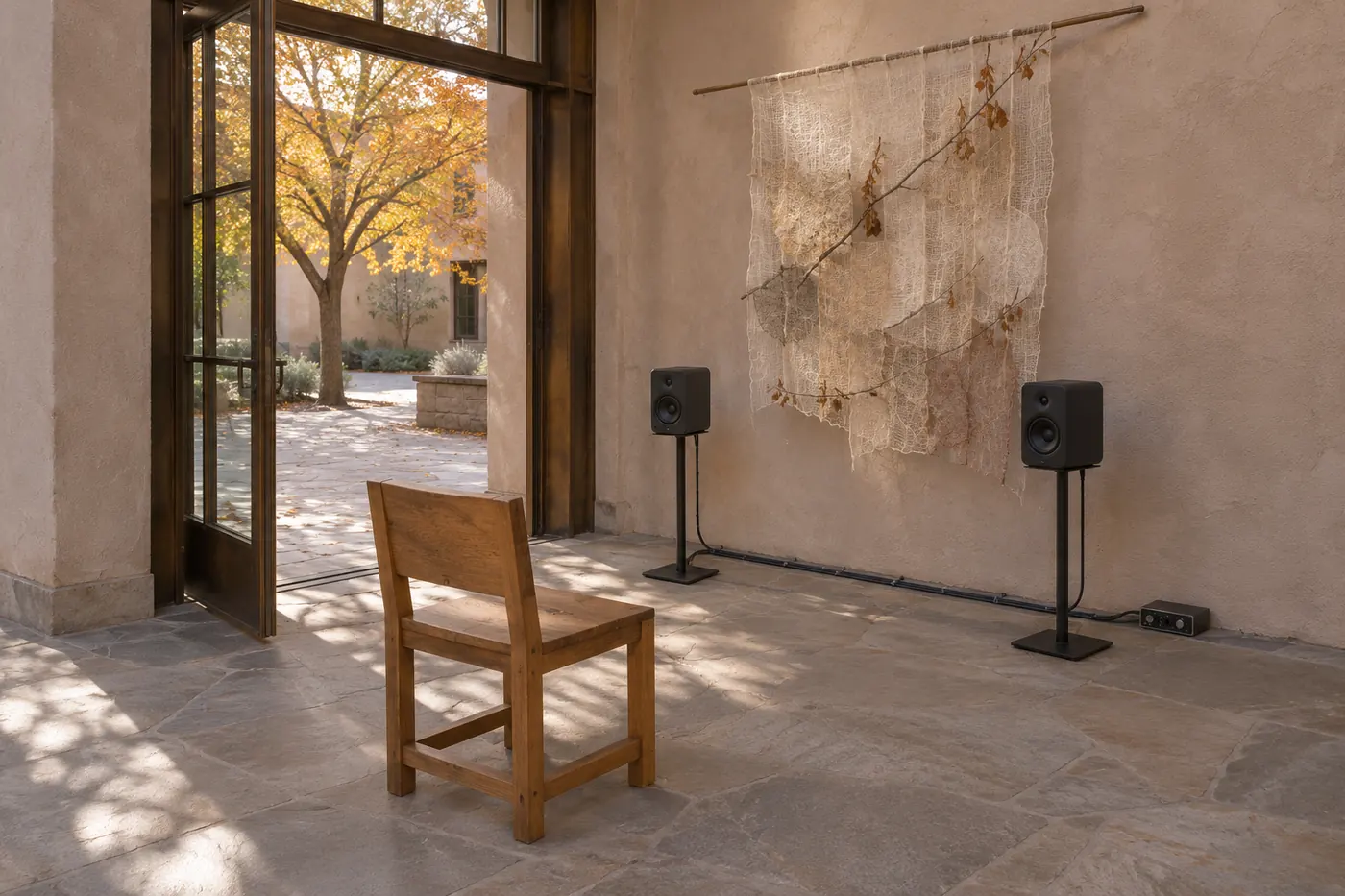
A final presentation with a record.
A recital, composition portfolio or sound installation with score and recording notes.
The final review considers both the presented work and its development. Credit, contextual research and an honest account of your role belong beside the work. Music practice; recording support; sound-art work; graduate composition or performance study. Individual advising helps connect the next goal to a relevant selection of work and experience; it does not guarantee an outcome.
Preparing to begin.
Follow the audition guidance for this program. Review considers preparation and the ability to develop through feedback; a professional production or previous publication is not expected. Academic records and creative materials are reviewed together, while transfer-credit equivalence is evaluated separately.