Listening to the Threshold
Can the boundary between a room and its courtyard become a musical structure?
Where the work began.
Avery made short recordings of nonprivate campus sounds near three doorways, avoiding conversations and identifiable personal material. Each recording was logged with its location, time and permission context. The initial collection included footsteps, a door hinge, distant rehearsal and the change in room tone when a door opened.
Trials and revision.
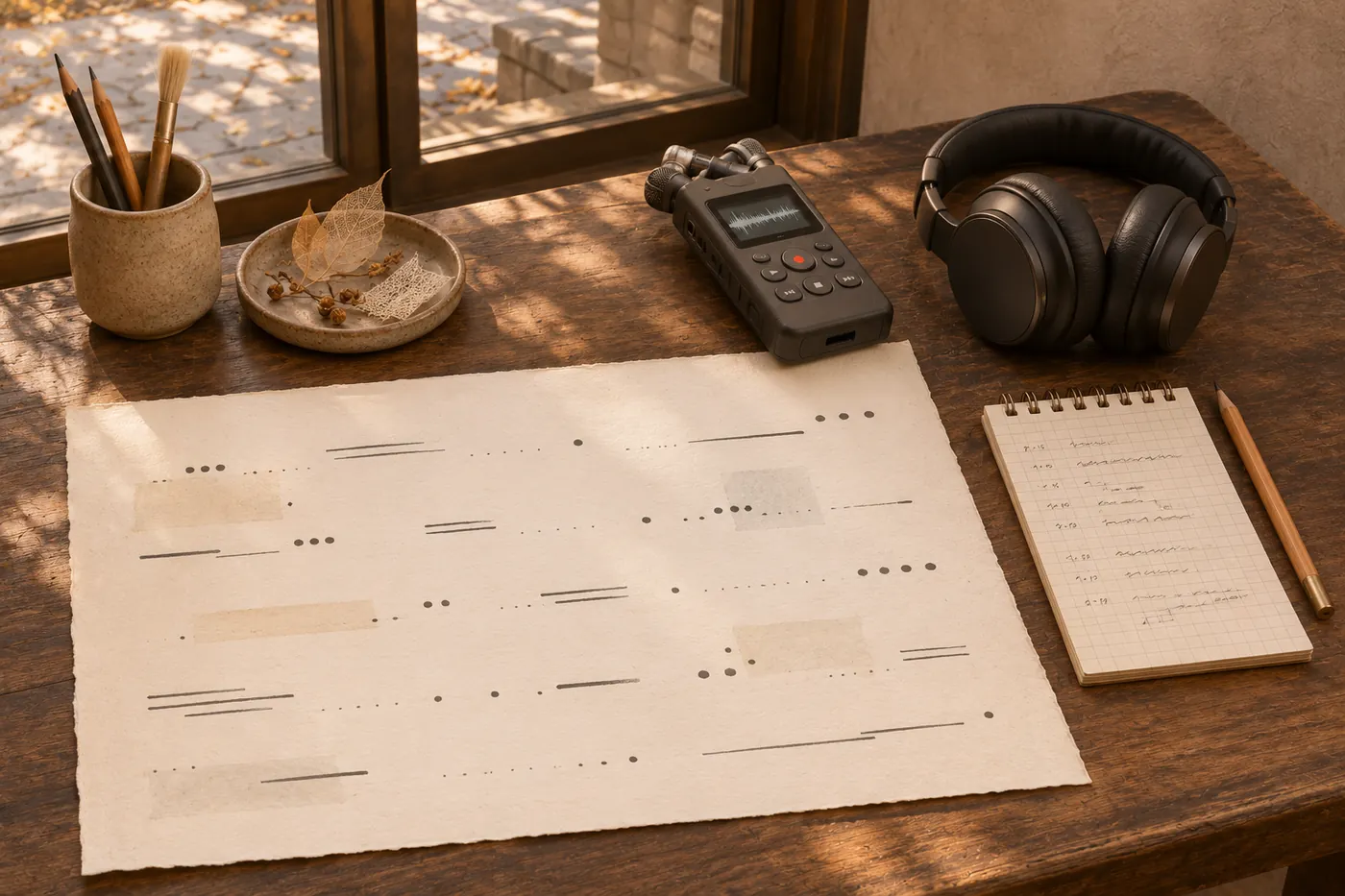
Rather than simply play the sounds in sequence, Avery mapped durations and repeated intervals into a graphic score. A listening test compared a dense edit with a quieter arrangement containing longer pauses. Feedback suggested that the quieter version made the transition between inside and outside easier to hear.
A work, presented.
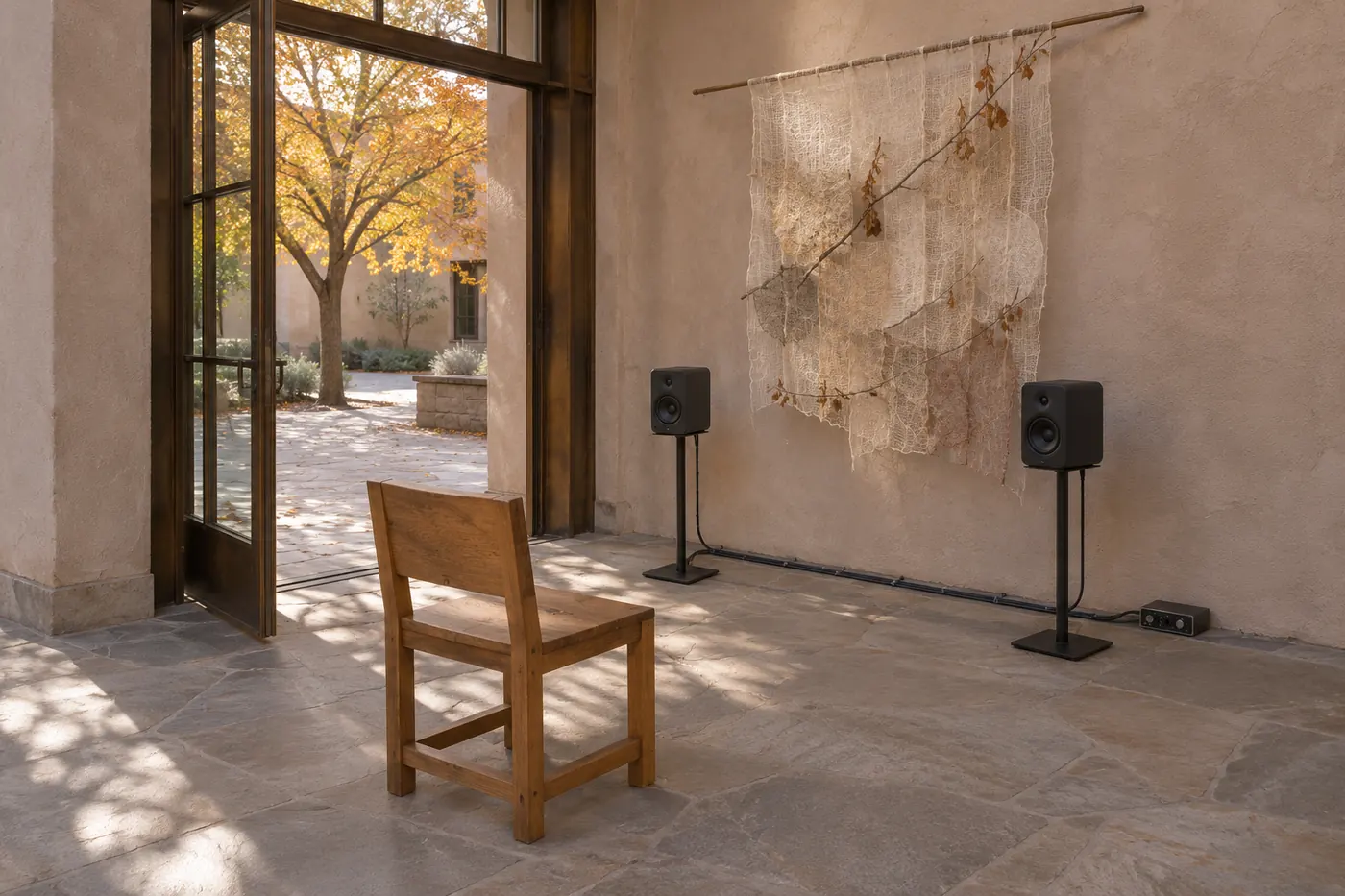
The installation proposal uses two modest speakers and a seating point, with volume and listening duration stated on a label. A diagram identifies cable routes and the clear circulation space. The project record includes source credits and notes about which recordings were excluded.
The next question.
The final project record brings the score, listening map and installation photographs together. Each describes a different part of the work: its structure, its source relationships and the place offered to a listener. Future work could compare the same doorway at another time of year while preserving the project’s recording boundaries. Avery’s source sheet gives the duration and role of each selected recording, with a short note when a sound was altered in the edit. The graphic score is an original project artifact. A reader can follow the movement from source to arrangement to installation and compare the diagram with the practical setting in which a listener encounters the work.
Follow the study behind the work.
A course project is one point in a longer practice. The program page connects this work to the learning sequence, the shared space and the kind of final presentation students develop in the senior year.