A sequence at hand
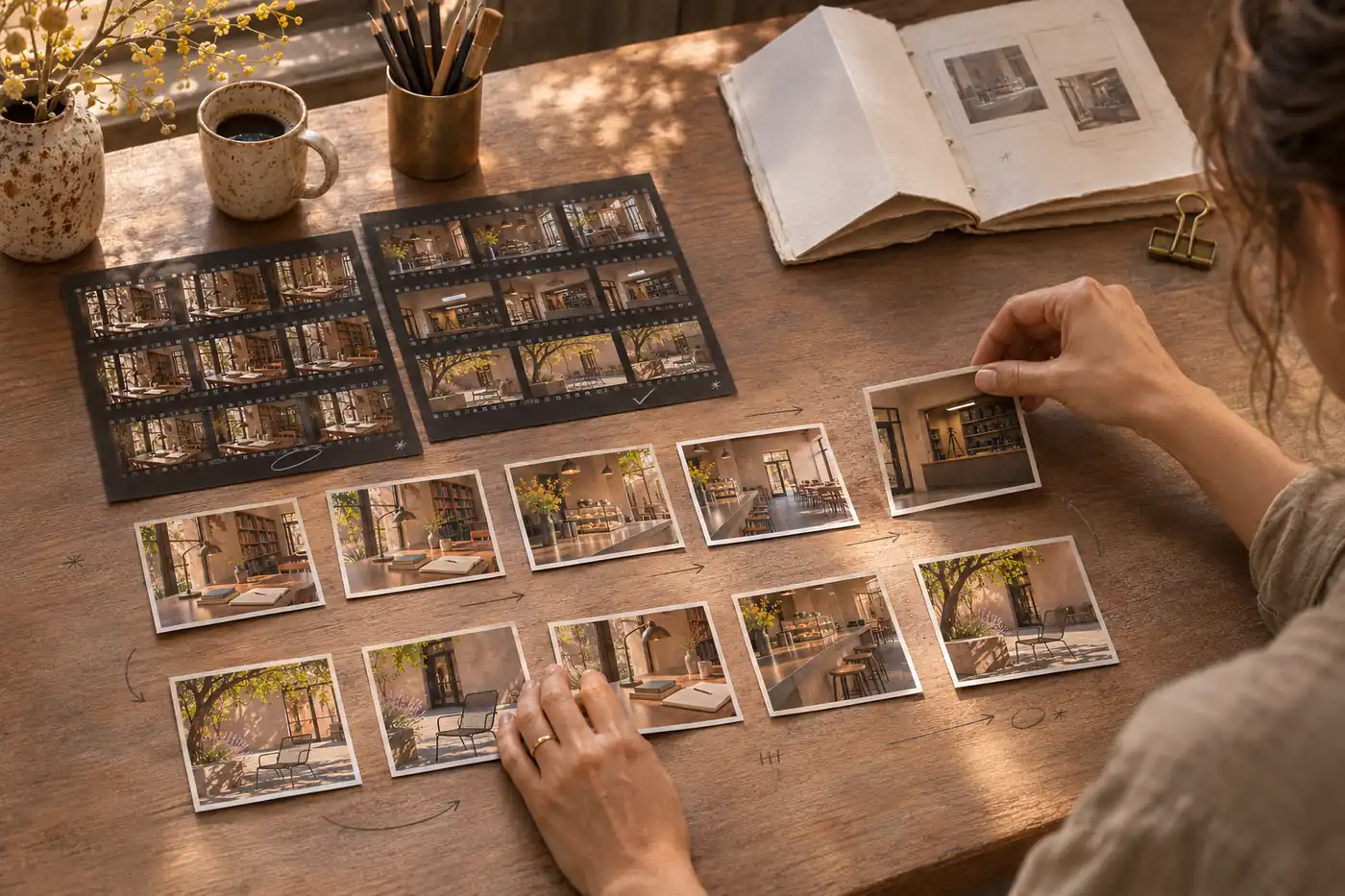
Students in Photobook Studio brought working dummies to a shared reading table at Northlight Media Center this week. The books ranged from folded sheets to more developed page sequences. None was treated as finished simply because it had a cover. The session asked readers to turn the pages at their own pace, then describe where their understanding of a place, person or event changed.
Two edits, one set of images
Evelyn Tran presented two versions of Between Shifts, a project about transitions in the campus working day. One edit grouped pictures by room, while another followed changes of light and repeated gestures. Readers were not told which version the maker preferred. Their accounts exposed a gap in time that had been clear in the contact sheets but remained difficult to follow in the smaller book.
Captions without overexplaining
Leah Park asked students to compare what a caption supplied with what the image already showed. A place name could provide useful context; an explanation of a feeling might close a question too quickly. The group tried moving a caption to another page and removing a repeated line. Each test stayed small enough to print again, keeping revision possible before the expense of a larger or more finished edition.
People in the sequence
The discussion also returned to the relationship between a photographer and a participant. Tran’s notes identify consent conversations and the intended course display. The project excludes private timetable and contact details, and a later version will be shown to participants before any broader presentation is considered. The sequence is a student interpretation, with responsibilities that continue after the shutter is pressed and the classroom discussion ends.
From table to project record
Students left with a marked copy and three concrete actions for their next edit. The Photography program’s Student Work page follows Tran’s process through contact sheets, a book spread and a revision account. Folio Library supports contextual research and the preparation of a short book statement. Equipment and output questions remain with the Northlight desk, where course induction and availability determine access to shared resources.
A reader can disagree
The reading-table format leaves room for different accounts of the same book. A student is not required to rewrite a sequence until every reader agrees, but should be able to distinguish a productive ambiguity from a missing piece of information. Park asked the group to preserve one unexpected response and test it against the next dummy. The resulting notes link a reader’s observation to a practical change in page order, scale or caption, making the discussion useful after the books have left the table.