Film & Performing Arts
Contemporary Dance, BFA
Investigate movement through technical practice, choreographic questions and collaborative rehearsal.
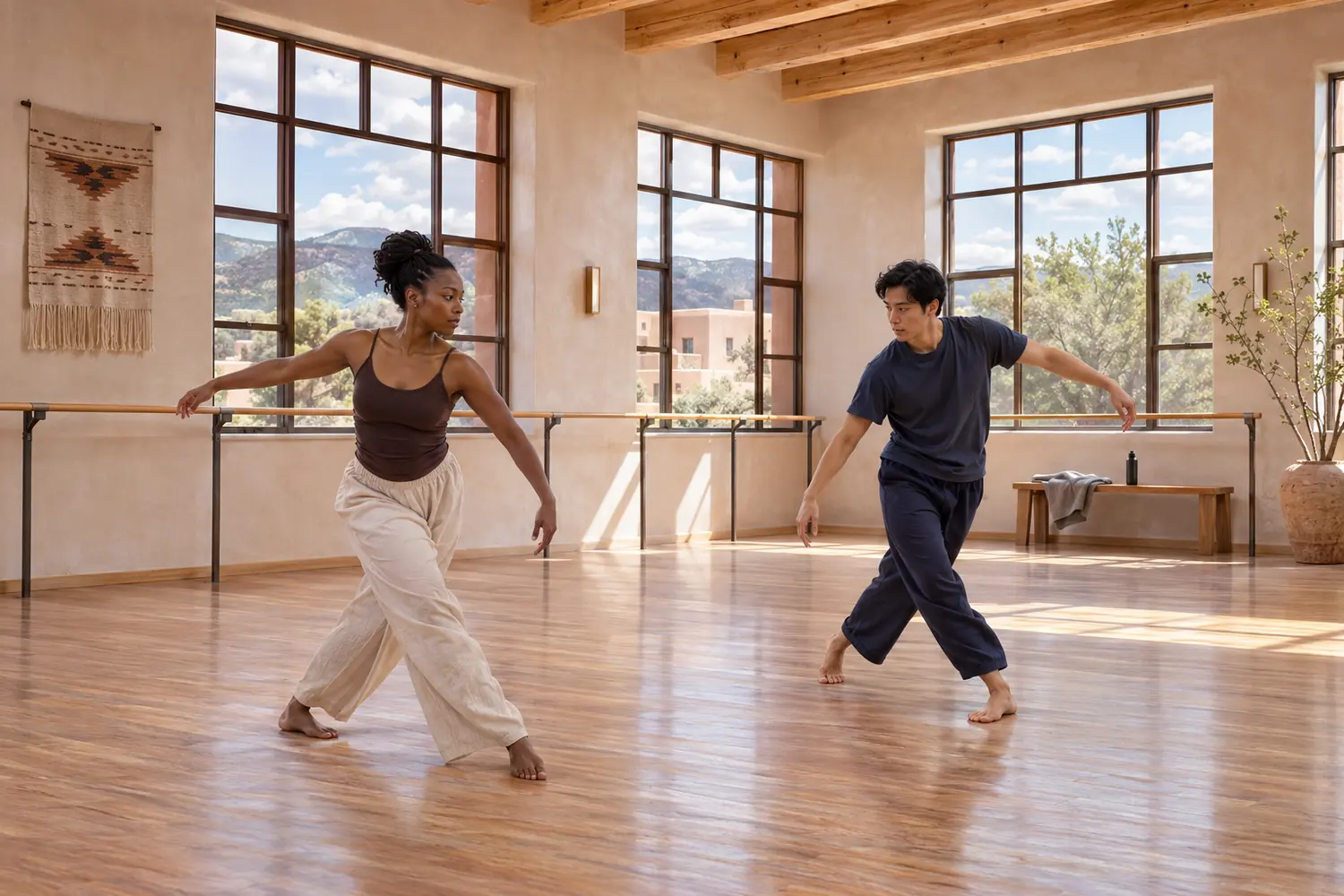
A movement question can hold a whole work.
Weight, duration, level and direction offer a vocabulary for investigation. Technique is developed through preparation and repetition, then connected to composition, observation and collaboration. Partner work includes consent and practical alternatives; the process belongs to the people making the movement.
The program values a sustained practice: prepare the work, bring a specific question to discussion, compare versions and preserve a useful record of the choices made. Contextual seminars and shared courses give the work a broader set of references without replacing its practical demands.
What you will learn.
01Develop a consistent movement practice with preparation and recovery.
02Compose using weight, duration, direction and spatial relationships.
03Communicate consent and responsibility in partner work.
04Document movement through notes and rehearsal records.
05Present choreography with a clear account of its development.
The practice across four years.
Year 1
Movement Foundations Studio: develop a phrase from changes of weight and level. Technique and Phrase Studio: revise a phrase across tempo and spatial direction.
Year 2
Composition Studio: compose a study around repetition and interruption. Partnering and Space Studio: negotiate partner tasks with clear consent and alternatives.
Year 3
Choreographic Development: expand one motif into a structured solo. Rehearsal and Movement Research: compare a rehearsal recording with live feedback.
Year 4
Senior Choreography Proposal: prepare a choreographic plan with access and rehearsal needs. Senior Dance Presentation: present a completed work and an annotated choreographic record.
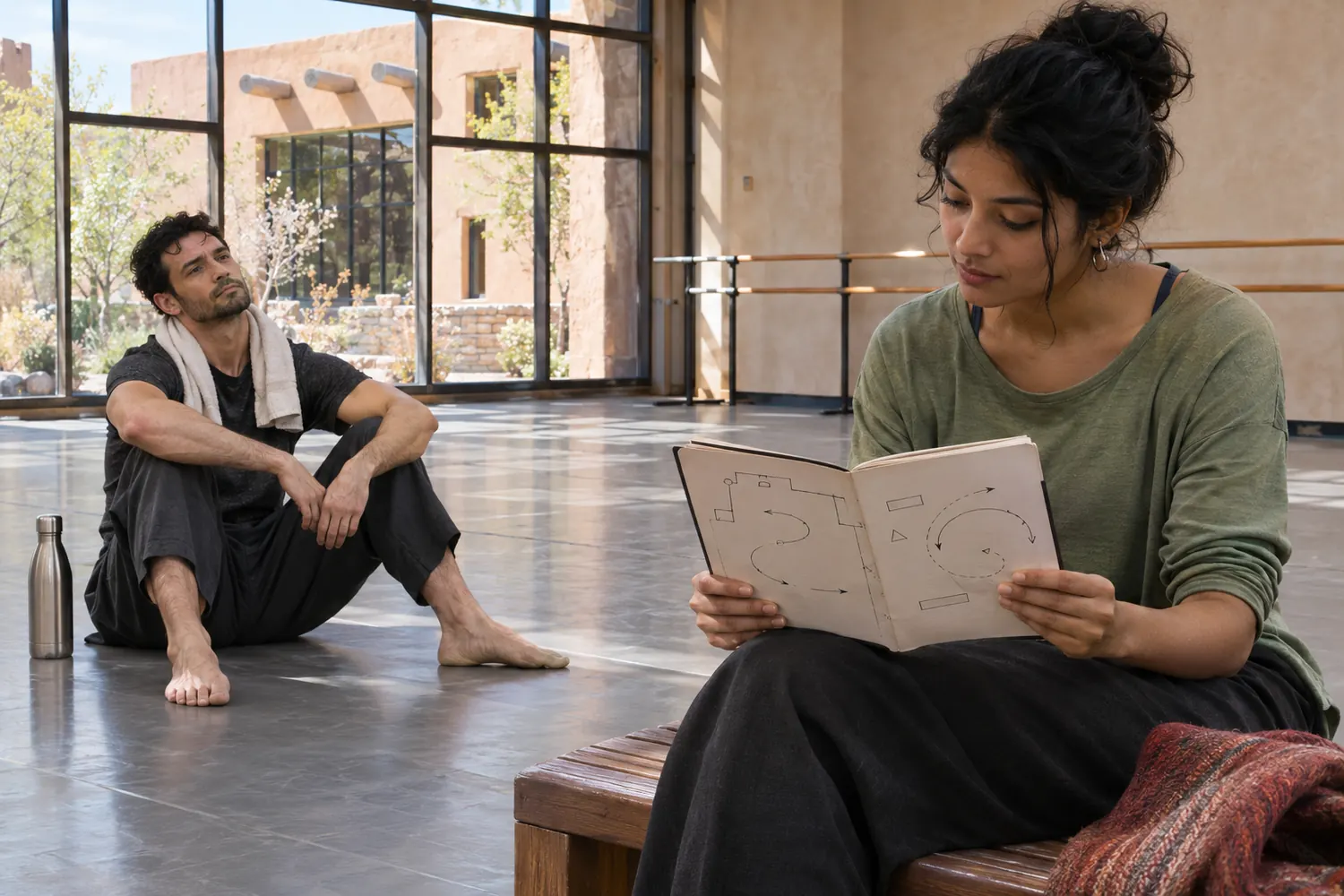
Your curriculum, made visible.
60Major
18Foundation
30General Education
12Free Elective
The degree requires 120 semester credits. Major, foundation, contextual and elective requirements are counted separately, and a course earns degree credit once.
DANC 101Movement Foundations Studio
Develop a phrase from changes of weight and level. Students investigate weight, balance, direction and changes of level through adaptable movement tasks. Preparation and reflection are treated as parts of learning rather than activities outside the course.
Read the catalog entryDANC 102Technique and Phrase Studio
Revise a phrase across tempo and spatial direction. Technique is developed through repeated phrases and deliberate variations of duration and space. Observation notes connect a physical choice to the resulting movement quality.
Read the catalog entryDANC 201Composition Studio
Compose a study around repetition and interruption. Students build short compositions through motif, repetition, contrast and interruption. Several versions are compared through peer observation and a clear account of revision.
Read the catalog entryDANC 202Partnering and Space Studio
Negotiate partner tasks with clear consent and alternatives. Partner tasks explore distance and negotiated support with explicit consent and alternatives. Students document the cues and spatial decisions that make a sequence repeatable.
Read the catalog entryDANC 301Choreographic Development
Expand one motif into a structured solo. A compositional question is extended into a longer solo or duet. Rehearsal planning, viewer position and the relation between structure and movement detail guide revision.
Read the catalog entryDANC 302Rehearsal and Movement Research
Compare a rehearsal recording with live feedback. Students frame movement research through a specific question and a sequence of trials. Video, written notes and live feedback are considered as different records of the process.
Read the catalog entryDANC 401Senior Choreography Proposal
Prepare a choreographic plan with access and rehearsal needs. A senior proposal includes movement material, collaborators, preparation, access and rehearsal scope. A short trial is reviewed before the final compositional structure is committed.
Read the catalog entryDANC 402Senior Dance Presentation
Present a completed work and an annotated choreographic record. Students present a resolved choreographic work and a process dossier. The review considers compositional choices, collaboration and the clarity of a documented revision path.
Read the catalog entryDANC 141Dance Contexts
Students examine selected dance practices through their teaching, performance and social contexts. Writing distinguishes observed movement from assumptions about a dancer’s intention.
Read the catalog entryDANC 241Movement Observation
Students observe timing, weight, direction and the relationships between bodies and viewers. Notation and video notes are compared as different partial records of a moving event.
Read the catalog entryDANC 341Collaboration and Care
Students build a rehearsal agreement around consent, preparation, roles and practical alternatives. Discussion considers how to maintain a composition while responding to the people making it.
Read the catalog entryDANC 441Choreographic Documentation
Students prepare a choreographic record through pathway maps, selected images, credits and a clear statement of revision. The record identifies which aspects are fixed and which remain responsive in performance.
Read the catalog entryEight semesters of developing work.
Full-time tuition covers 12–18 credits per semester. The BA/BFA sample plans carry 15 credits per term; the BMus plan carries 15–18 credits, including one 17-credit term. These are sample sequences, not promises of individual registration.
Year 1 · Spring
15 creditsYear 2 · Fall
15 creditsYear 2 · Spring
15 creditsYear 3 · Fall
15 creditsYear 3 · Spring
15 creditsYear 4 · Fall
15 creditsYear 4 · Spring
15 creditsSample plans name a feasible elective for every slot. Approved alternatives must match credits, prerequisites and seasonal availability and cannot duplicate a completed course. Open-context seminars numbered 141 are available across majors; higher seminars require the preceding seminar.
A student question in practice.
What changes when two dancers keep the same distance but alter the way they share weight?
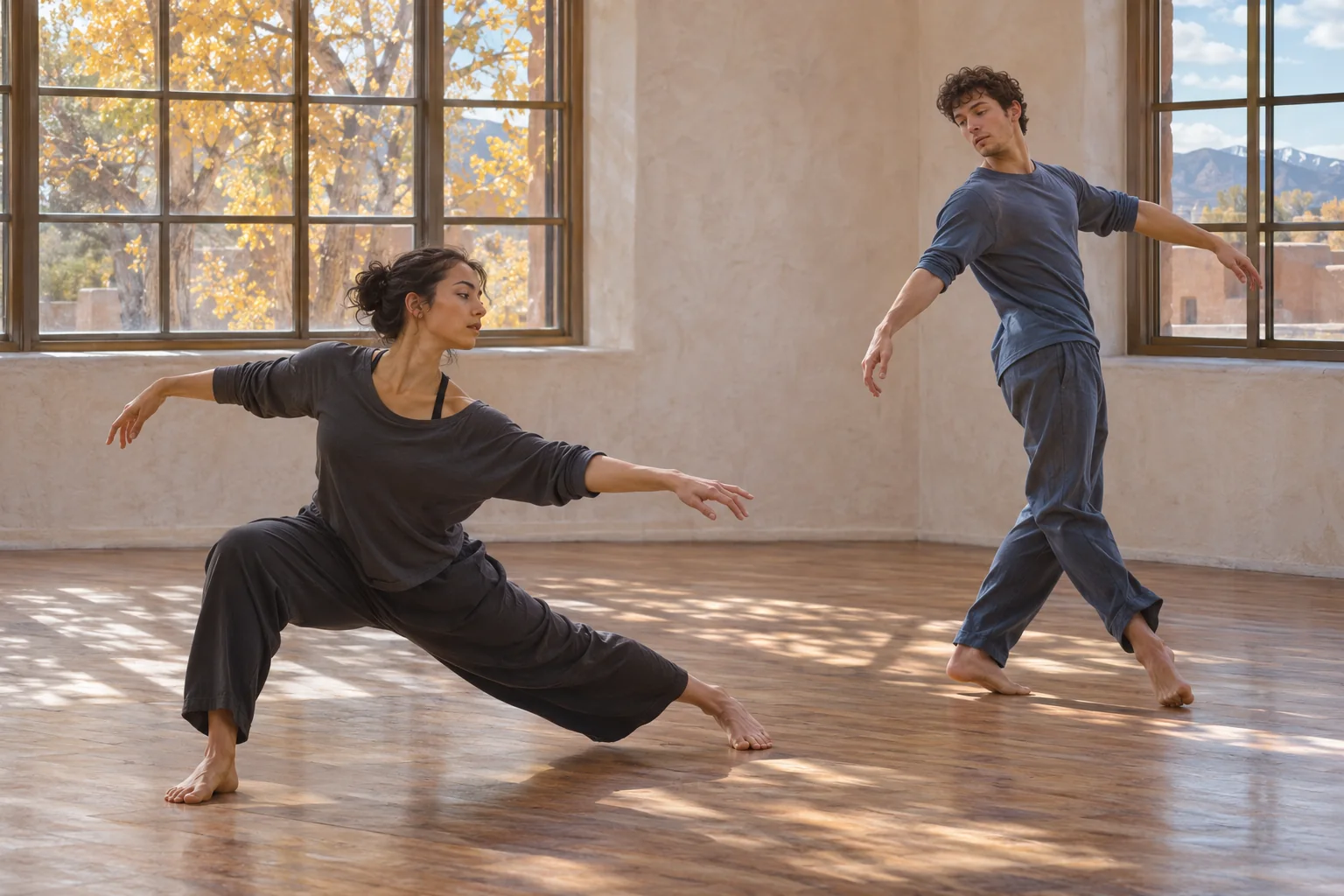
A final presentation with a record.
A choreographic work, movement notes and a rehearsal-process account.
The final review considers both the presented work and its development. Credit, contextual research and an honest account of your role belong beside the work. Dance practice; choreographic assistance; community arts; further dance study. Individual advising helps connect the next goal to a relevant selection of work and experience; it does not guarantee an outcome.
Preparing to begin.
Follow the audition guidance for this program. Review considers preparation and the ability to develop through feedback; a professional production or previous publication is not expected. Academic records and creative materials are reviewed together, while transfer-credit equivalence is evaluated separately.