Weight & Distance
What changes when two dancers keep the same distance but alter the way they share weight?
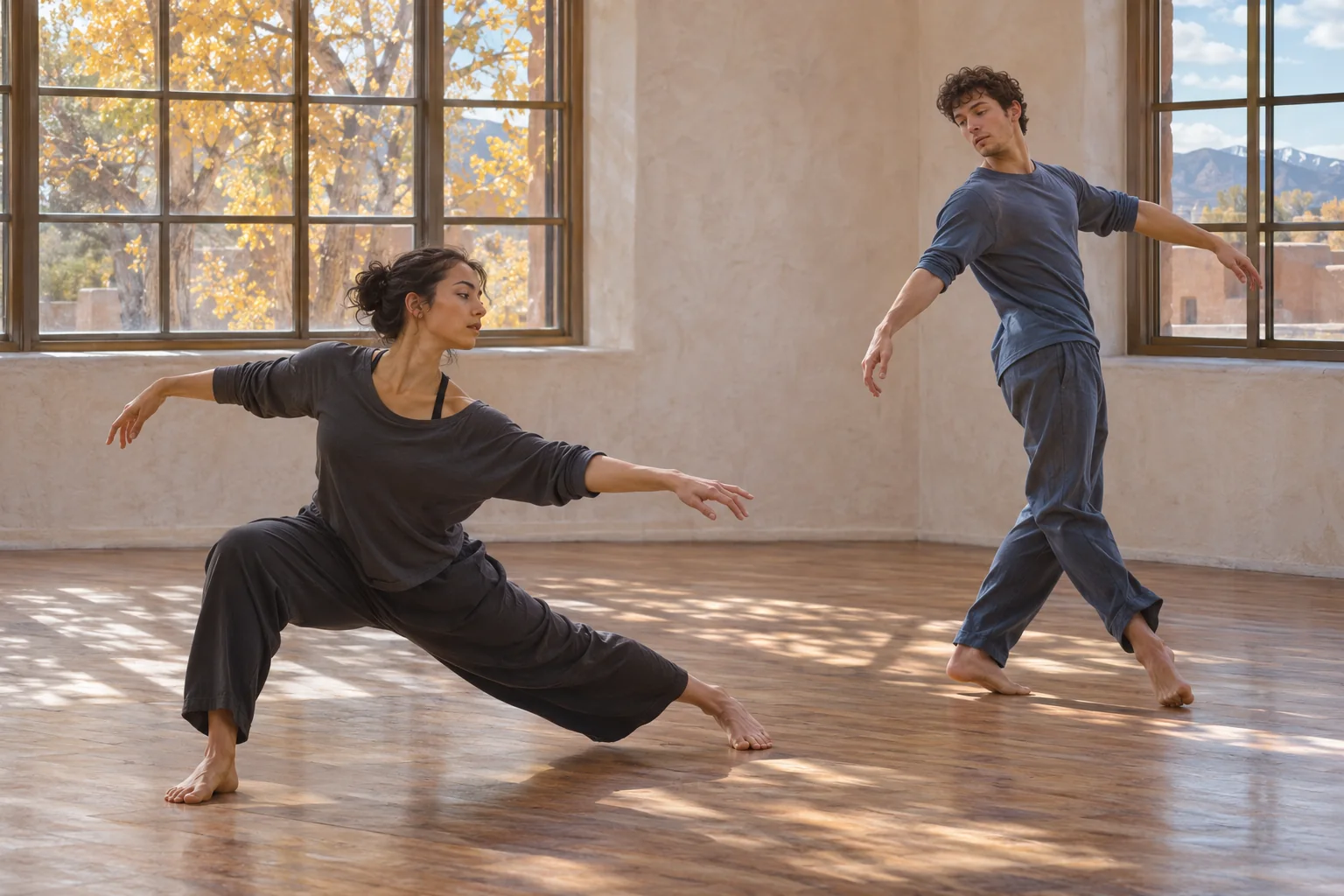
Where the work began.
Jordan began with a short movement phrase performed alone, then asked a partner to repeat it on a parallel path. The first trials held distance constant. Later trials changed timing, direction and the point at which one dancer offered support. Each partner could stop or adapt a task without losing a place in the composition.
Trials and revision.
Rehearsal recordings helped identify moments when the intended relationship was visible only from one side of the room. The dancers revised their pathway and removed a transfer that could not be repeated reliably within the available preparation time. Notes include agreed cues and alternatives as well as movement shapes.
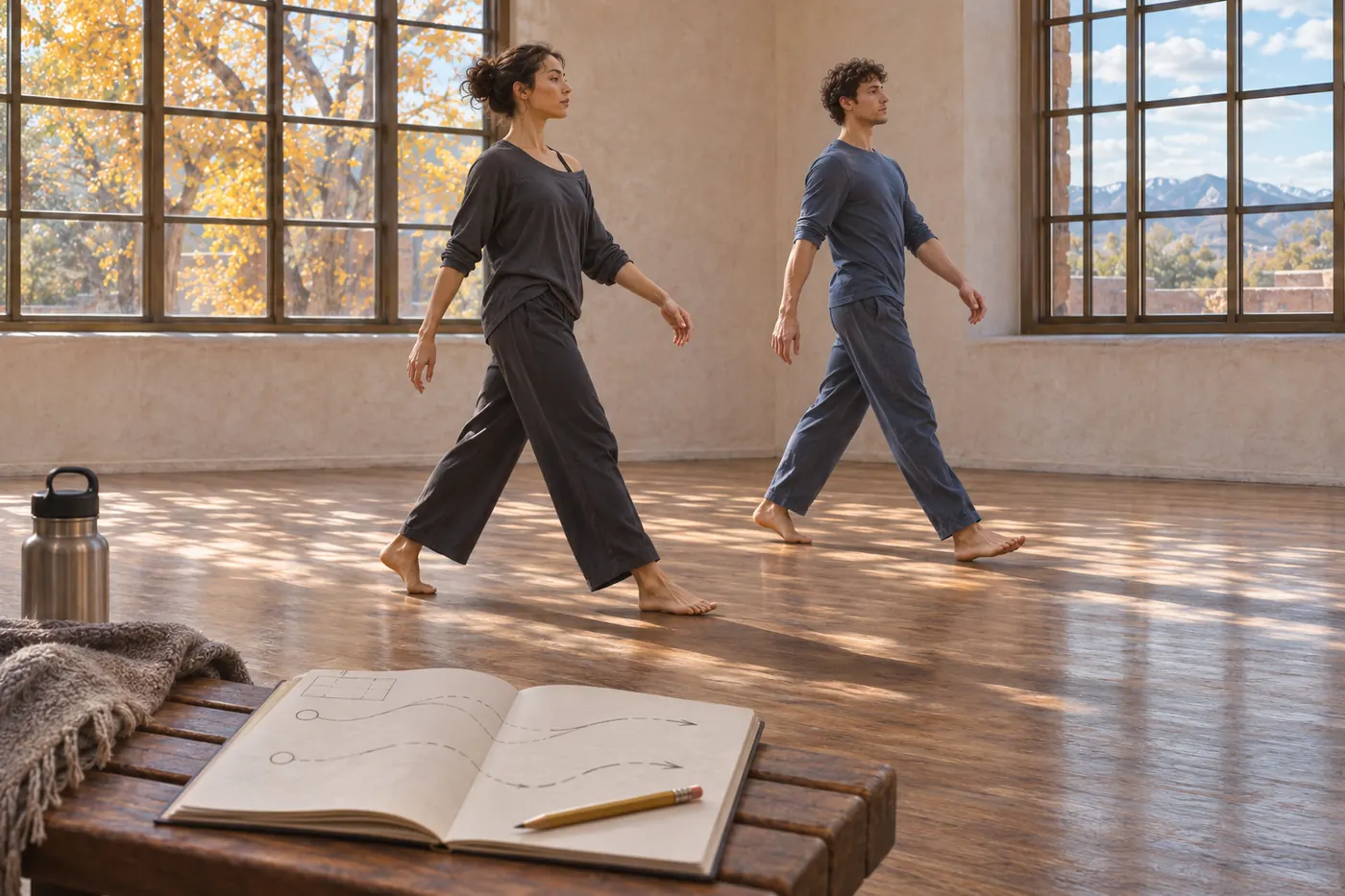
A work, presented.
The final duet uses a quiet beginning, a repeated crossing and an ending in which the dancers occupy the same line without touching. A movement map follows the pathways rather than attempting to fix every gesture into a single drawing.
The next question.
The project is shown through rehearsal and performance images with a written account of its development. Its emphasis is on shared decision-making and a repeatable composition, with preparation, consent and recovery treated as part of the practice. Jordan’s record distinguishes the choreographic idea from the dancers’ agreed way of carrying it out. A pathway can stay consistent even when a contact task is adapted or removed. The presentation notes identify that distinction and credit the partner’s contribution, keeping the project readable without presenting one body, technique or mode of participation as the only way to make the work.
Follow the study behind the work.
A course project is one point in a longer practice. The program page connects this work to the learning sequence, the shared space and the kind of final presentation students develop in the senior year.