Between Shifts
How can a sequence show a campus day without turning its workers into background?
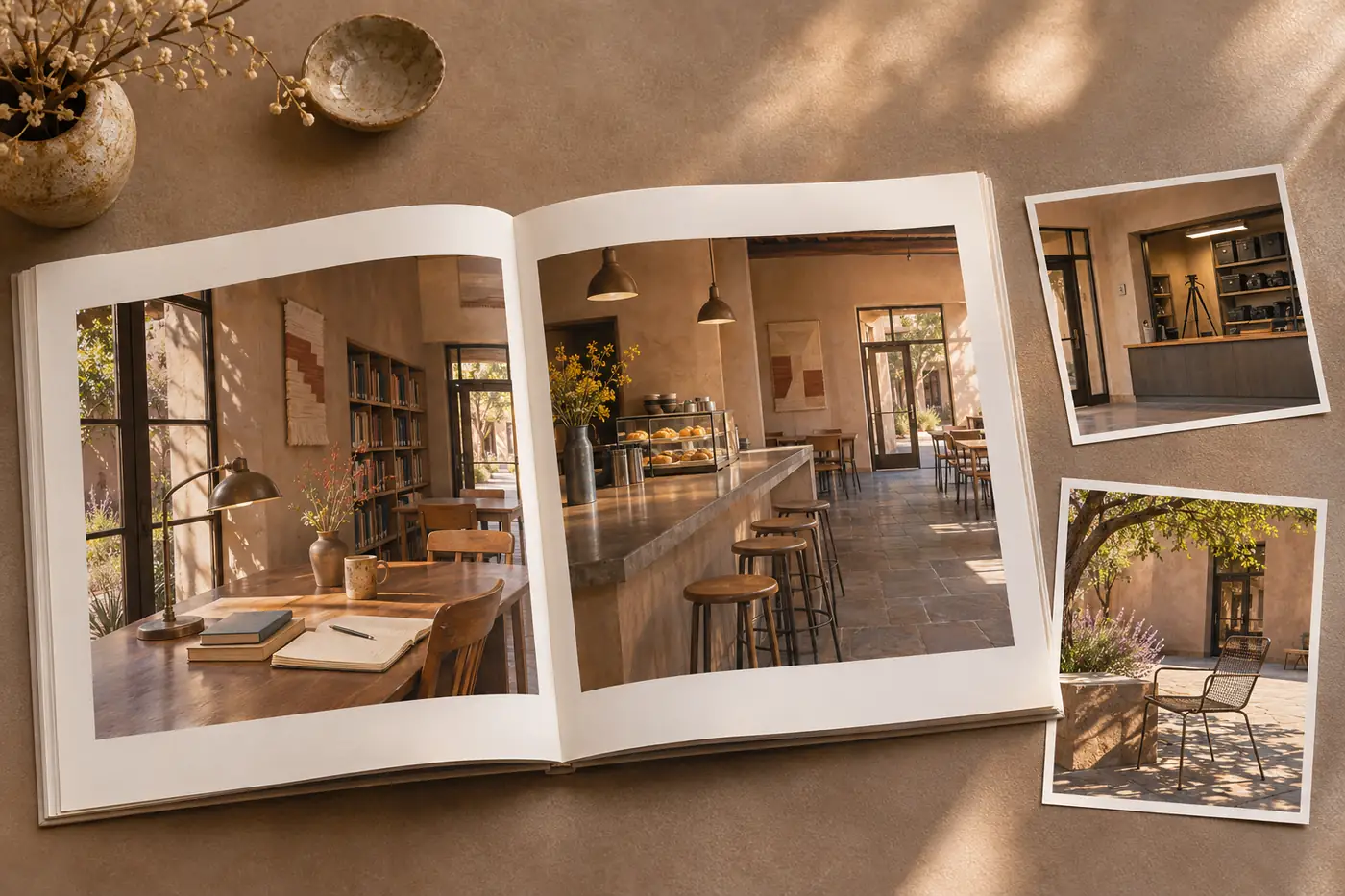
Where the work began.
Evelyn followed transitions between busy and quiet periods at Courtyard Commons, the equipment desk and the library. Before photographing anyone, the project was described in a short conversation about its class use and intended display. People could decline, ask to see an image or prefer a photograph of the workspace without their face.
Trials and revision.
The first edit grouped pictures by location. A second edit used changes of gesture and light to move between spaces. Evelyn printed both versions at a small size, then asked classmates to describe the day they thought each version represented. Those responses exposed a jump in time that had been clear in the notebook but absent from the photographs.
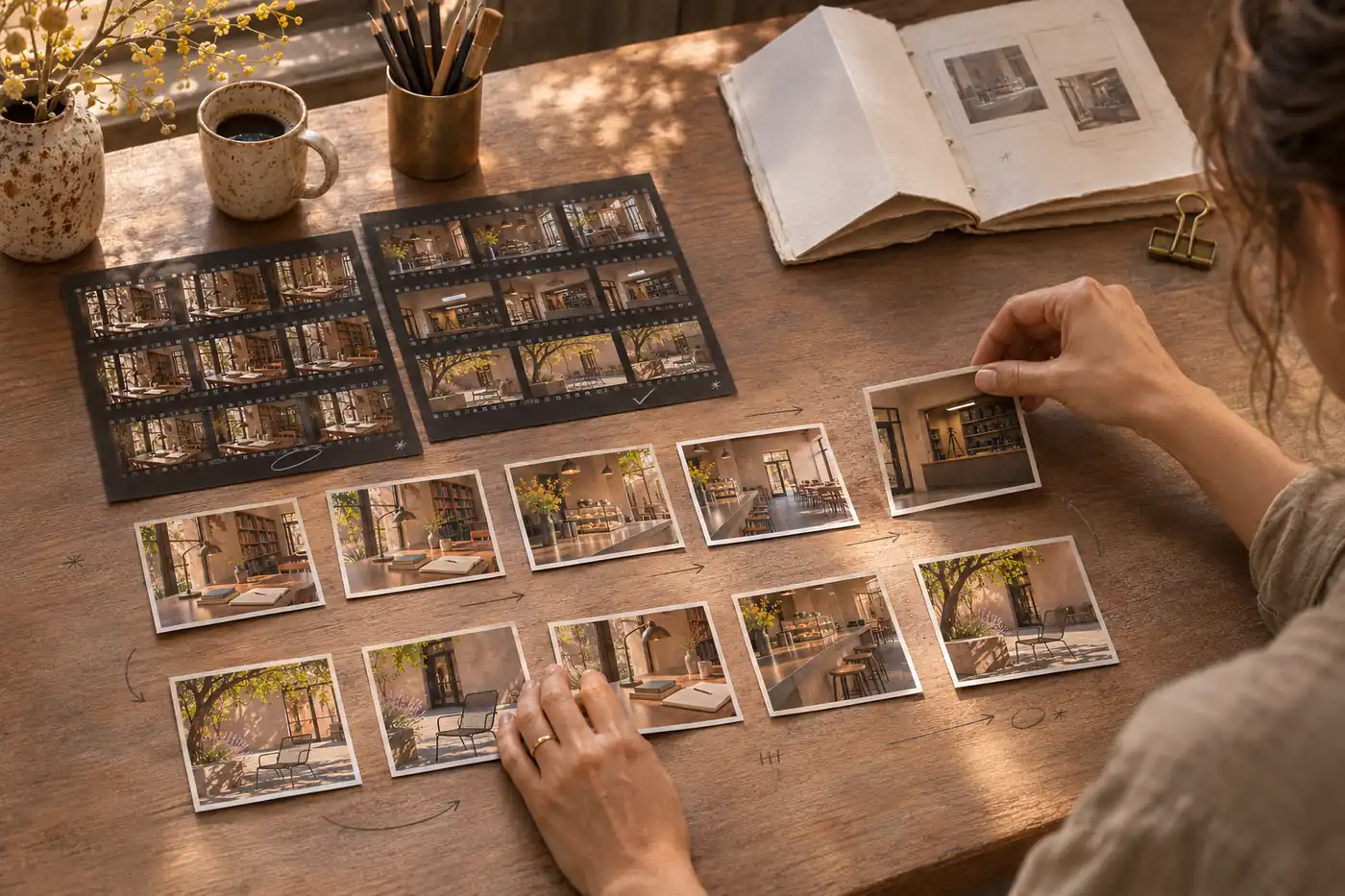
A work, presented.
The book dummy now pairs a full-page image with smaller details and a few spare captions. An editing sheet records why pictures were removed and where a caption needed more context. No private timetable or contact information appears in the book.
The next question.
The final review considered the sequence as an encounter between photographs, captions and the reader’s pace. Evelyn plans to show the next dummy to the participants before deciding whether to develop the project beyond the classroom. The project archive separates the raw contact sheets, the classroom edit and the smaller set approved for display. A reader can therefore see how a sequence was built without gaining access to every photograph made during the project. The book and its process record maintain the distinction between participation in a course and consent to wider publication.
Follow the study behind the work.
A course project is one point in a longer practice. The program page connects this work to the learning sequence, the shared space and the kind of final presentation students develop in the senior year.