Held in Light
How can a light work change a viewer’s sense of a familiar doorway?
Where the work began.
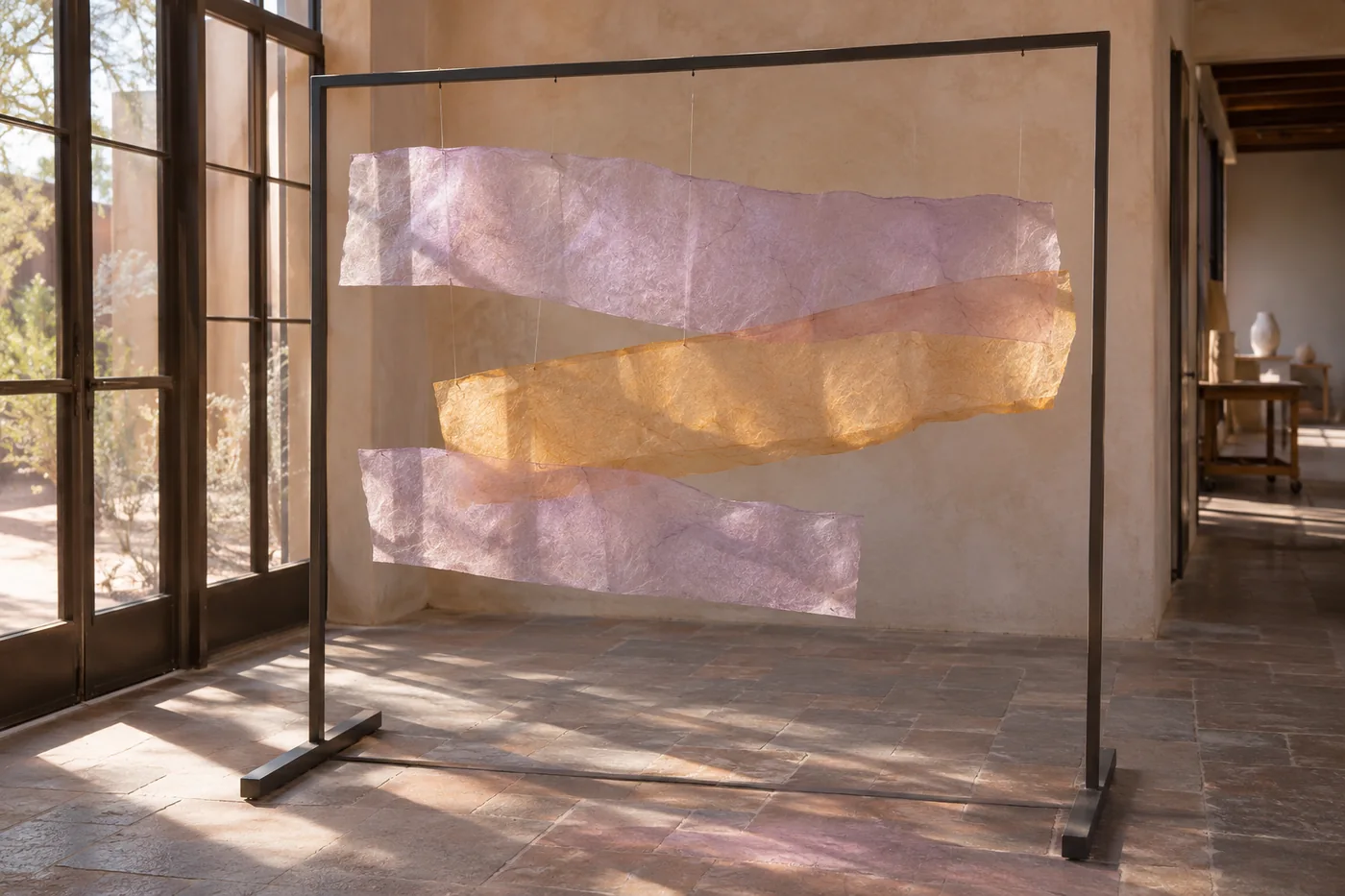
Maren began with a set of drawings made at the same courtyard entrance in early morning and late afternoon. The drawings recorded the changing edge of a shadow rather than the architecture as a whole. In the studio, that edge became a group of translucent paper planes suspended from a shallow support.
Trials and revision.
The first model used evenly spaced panels. Peer responses suggested that its regular spacing made the piece read as a screen. Maren shortened two panels, left one interval open and tested the work at three heights. Photographs from both sides helped compare the density of the colored overlap without treating a single camera view as the finished work.
A work, presented.
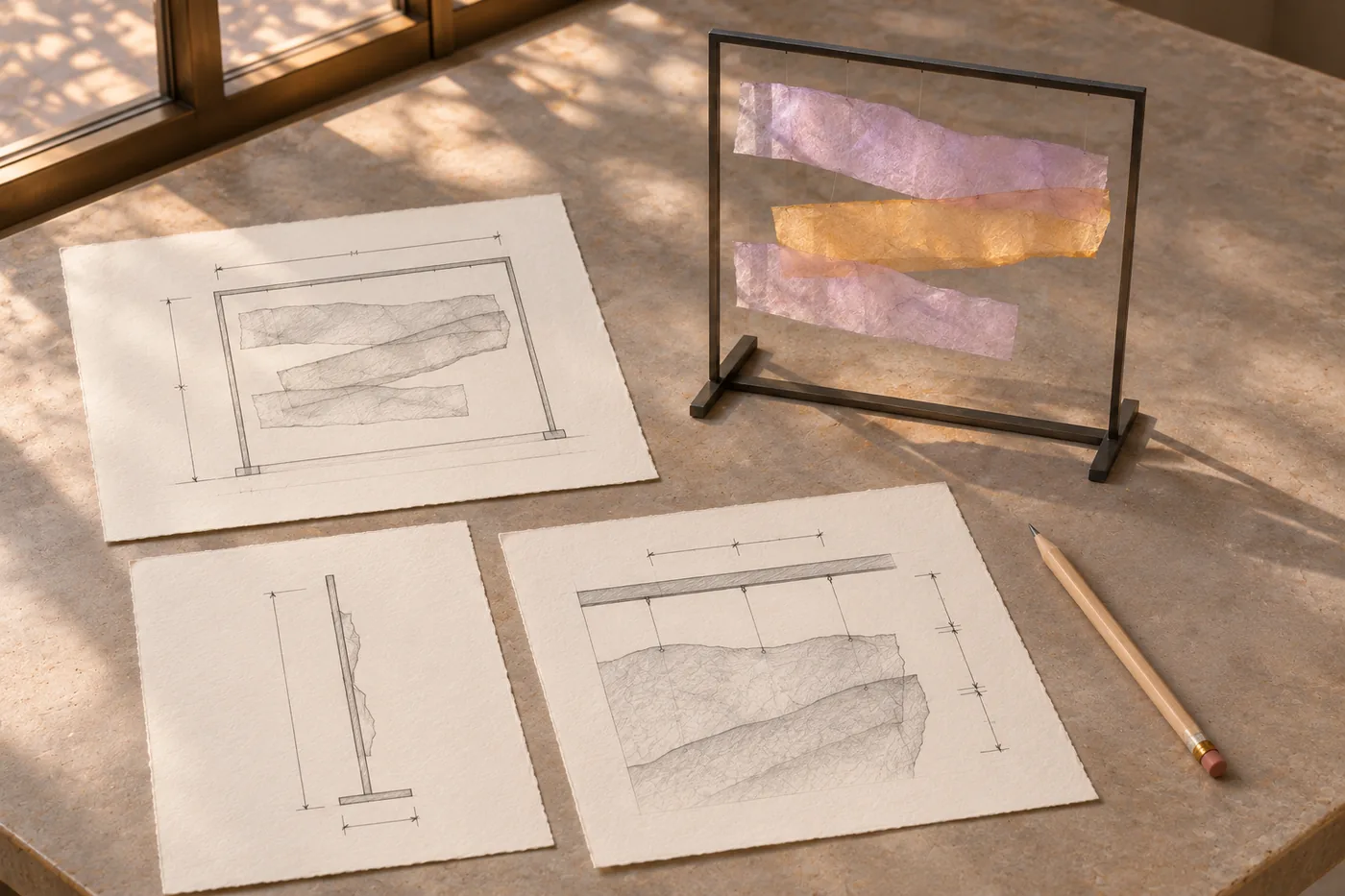
The final study uses a reversible support rather than permanent attachment to a building. An installation plan identifies the clear walking route, suspension points and the light conditions under which the piece should be seen. A short caption describes materials and a drawing beside the work traces the changes between the first model and the final arrangement.
The next question.
The project remains a study in how a viewer moves, rather than a claim that one view is correct. In the next revision, Maren plans to test a version with lower panels so that seated viewers can encounter a different set of overlaps. The project record keeps the three height tests at the same scale, so a reader can compare a genuine change rather than a more flattering photograph. The selected installation view is accompanied by a process view, not a second unrelated paper sculpture. Credits identify the student maker and the classmates who assisted with the temporary installation.
Follow the study behind the work.
A course project is one point in a longer practice. The program page connects this work to the learning sequence, the shared space and the kind of final presentation students develop in the senior year.