Year 1 · Fall
15 creditsCER 101Clay and Form Studio6
FND 101Observing & Making3
FND 102Materials & Process3
CRIT 101Writing About Art3
Explore clay as a material for useful objects, sculptural inquiry and carefully documented experimentation.
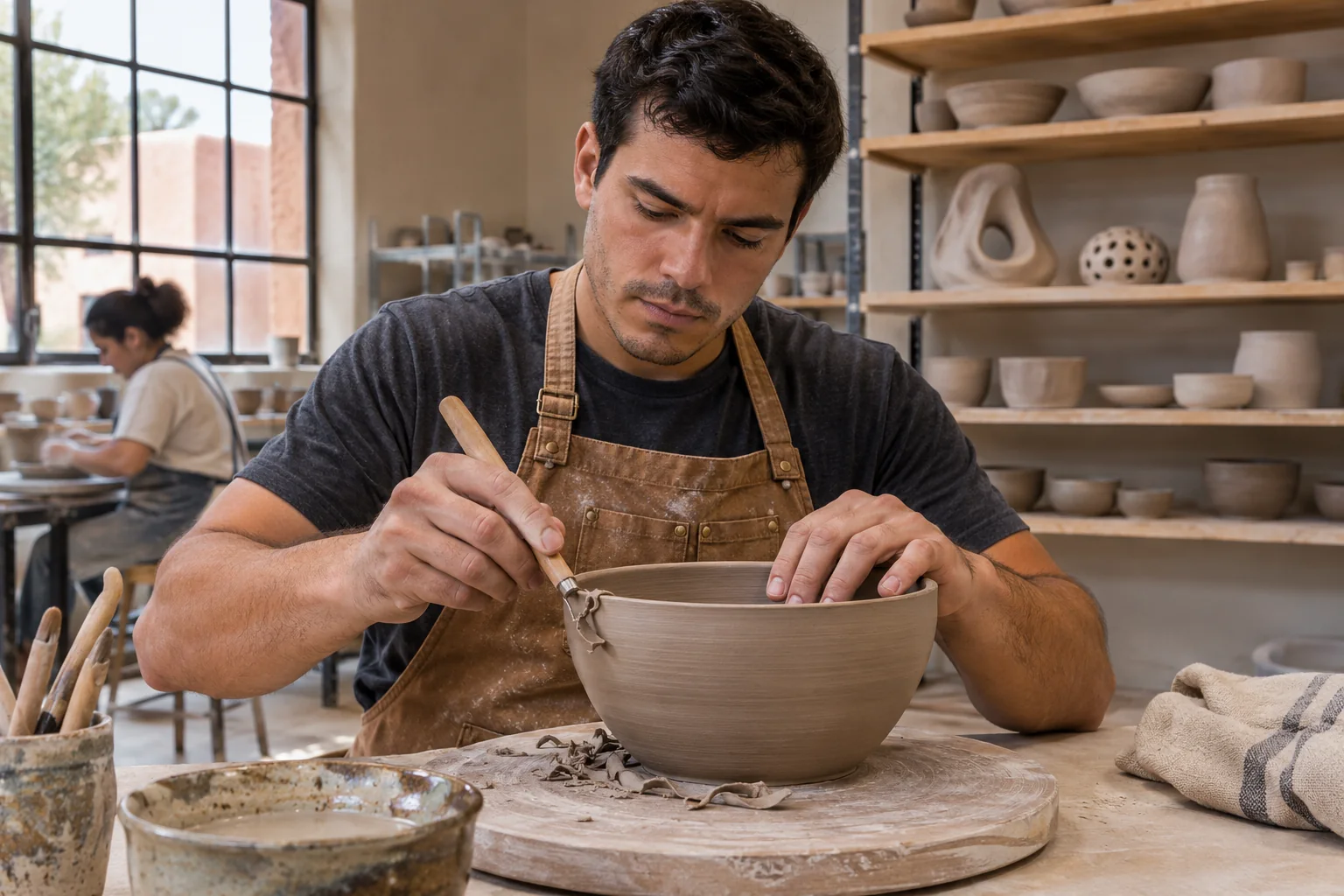
Begin with the weight of clay, the curve of a rim and the difference a surface can make. As your practice grows, you will connect those decisions to the way an object is handled, arranged or understood.
Supervised studio work and contextual study run alongside one another. Tests stay in the notebook, including those that do not work as intended. They become evidence for the next decision.
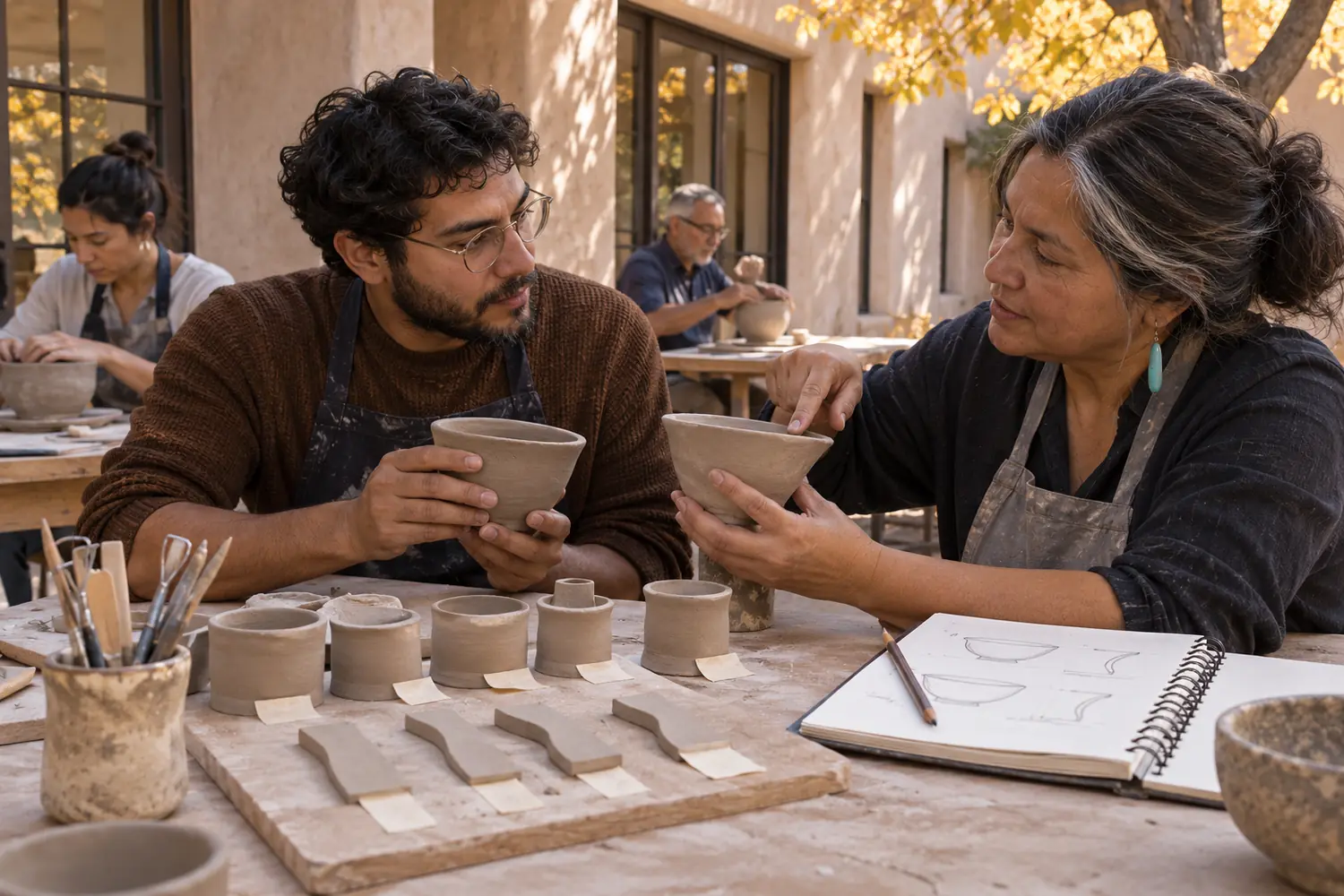
Eight integrated studios carry the main sequence from first-year form studies to a senior exhibition. Four seminars connect the work to objects, documentation, material research and display.
Total: 120 semester credits. Six-credit integrated studios normally combine six contact hours and about twelve independent working hours weekly over a teaching term.
Build three forms from one measured volume. Pinch, coil and slab studies are used to compare volume, wall and edge. Students learn to keep clay preparation and drying observations in a clear record.
Compare handbuilt and thrown versions of a vessel. Wheel and hand methods are compared through related forms. Repetition is used to understand proportion and handling, with preparation and cleaning integrated into studio practice.
Test a glaze across labelled clay samples. Students hold clay and form variables steady while comparing surface tests. Labels connect each piece to a notebook entry and the supervised firing context.
Document a supervised firing and its results. A connected set of forms is planned alongside a supervised studio schedule. Students examine how drying, storage and firing choices affect what can be compared reliably.
Develop a freestanding sculptural clay form. Clay becomes a material for spatial and sculptural questions. Models and tests help students identify the practical limits of a proposed form before developing a larger piece.
Use failed tests to revise a material question. A focused material question is pursued through a sequence of controlled trials. Discussion values readable evidence and useful failed tests as well as the selected result.
Select a series supported by a test archive. Students select a body of work, define a material question and plan the remaining tests. A proposal review considers the relation between form, surface, sequence and available production time.
Display a coherent series with process and use notes. A resolved group is presented with a material archive, display plan and contextual statement. The work is evaluated as an inquiry with documented choices rather than a commercial product certification.
Students read ceramic objects through form, making context, circulation and use. Close looking is separated from unsupported assumptions about origin or function.
Students connect labelled test pieces to preparation and supervised firing records. The course examines which variables a record must preserve for a result to be compared responsibly.
Students develop a material question by comparing trials rather than treating every new finish as a separate project. Research includes choices of clay, form and display context.
Students examine the rhythm and practical demands of displaying a ceramic series. Labels, shelf positions, handling instructions and material claims are reviewed together.
This sample sequence carries 15 credits in each semester. Every elective shown is an available catalog course with its own preparation and offering rules.
Approved alternatives must meet the same credits and prerequisites. A course counts once toward the degree. Transfer evaluation and individual preparation can change the sequence.
Six completed forms sit beside the record of how their rims, handles and surfaces changed. A material notebook makes the relationship between a trial and a selected piece visible.
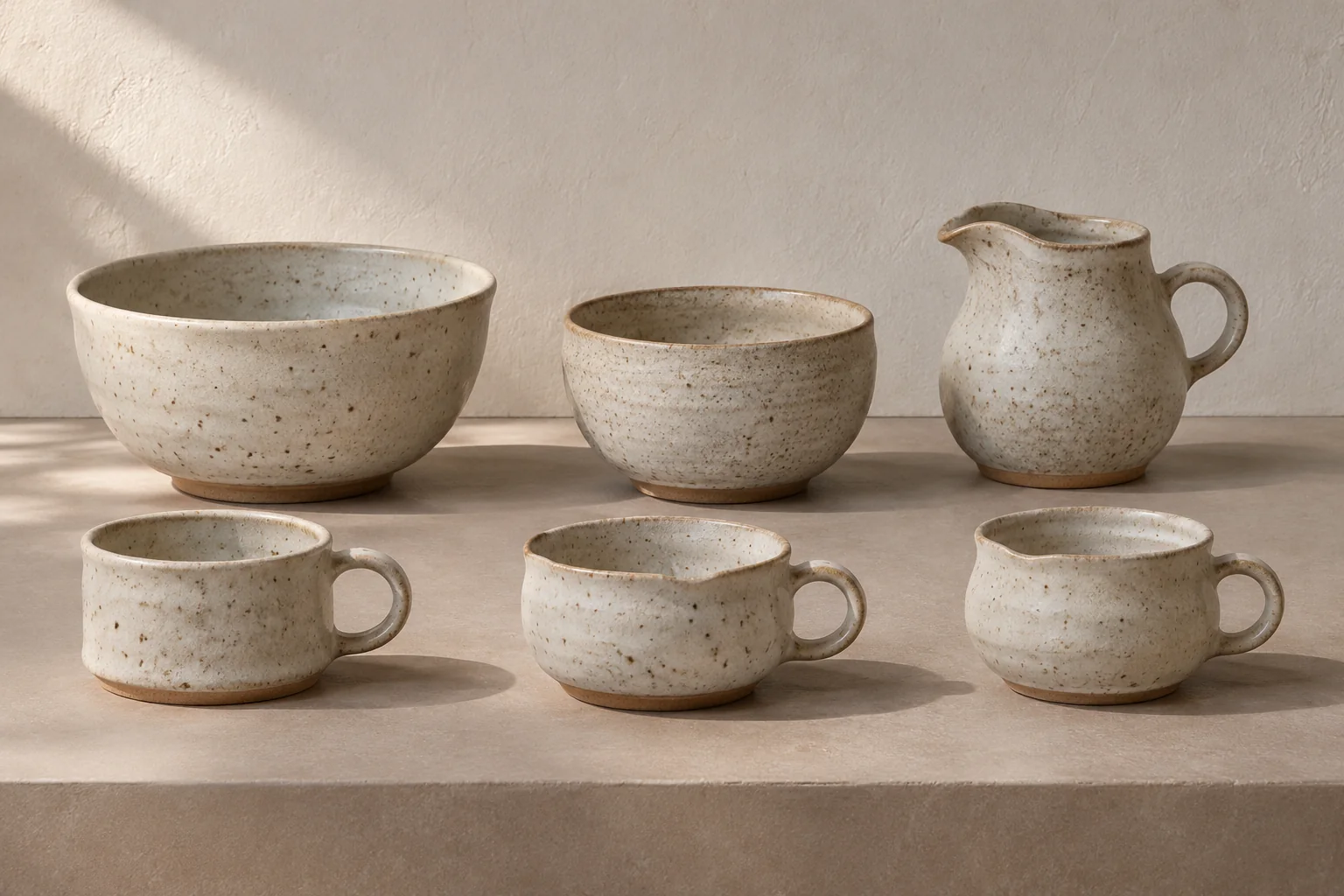
A ceramic series, labelled material archive and public exhibition. The review considers a coherent question, the quality of the developed work and the usefulness of its supporting record.
Directions after study may include ceramic practice, further fine-art study, studio-support roles or gallery work. Career preparation focuses on evidence of your contribution and the next experience you need, without promising employment.
Ceramics Program Lead
Arroyo Studios · AS 14
Mon/Wed 14:00–16:00 MT
+1 (505) 555-0122
[email protected]