Vessels for an
Ordinary Day.
Small differences. A familiar gesture. Six forms that hold a question about use, repetition and the everyday.
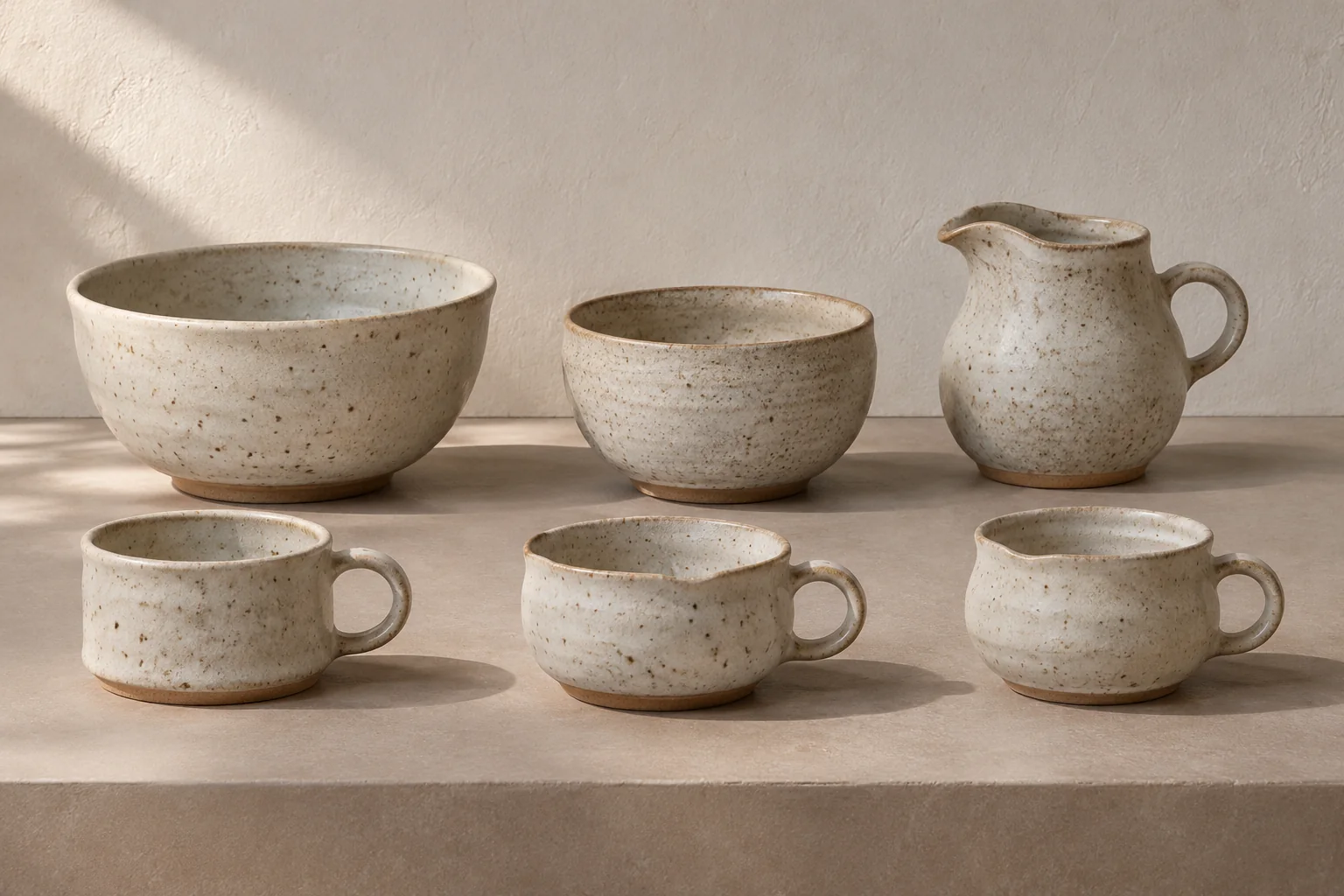
What makes a small vessel comfortable to hold, repeat and live with?
Where the work began.
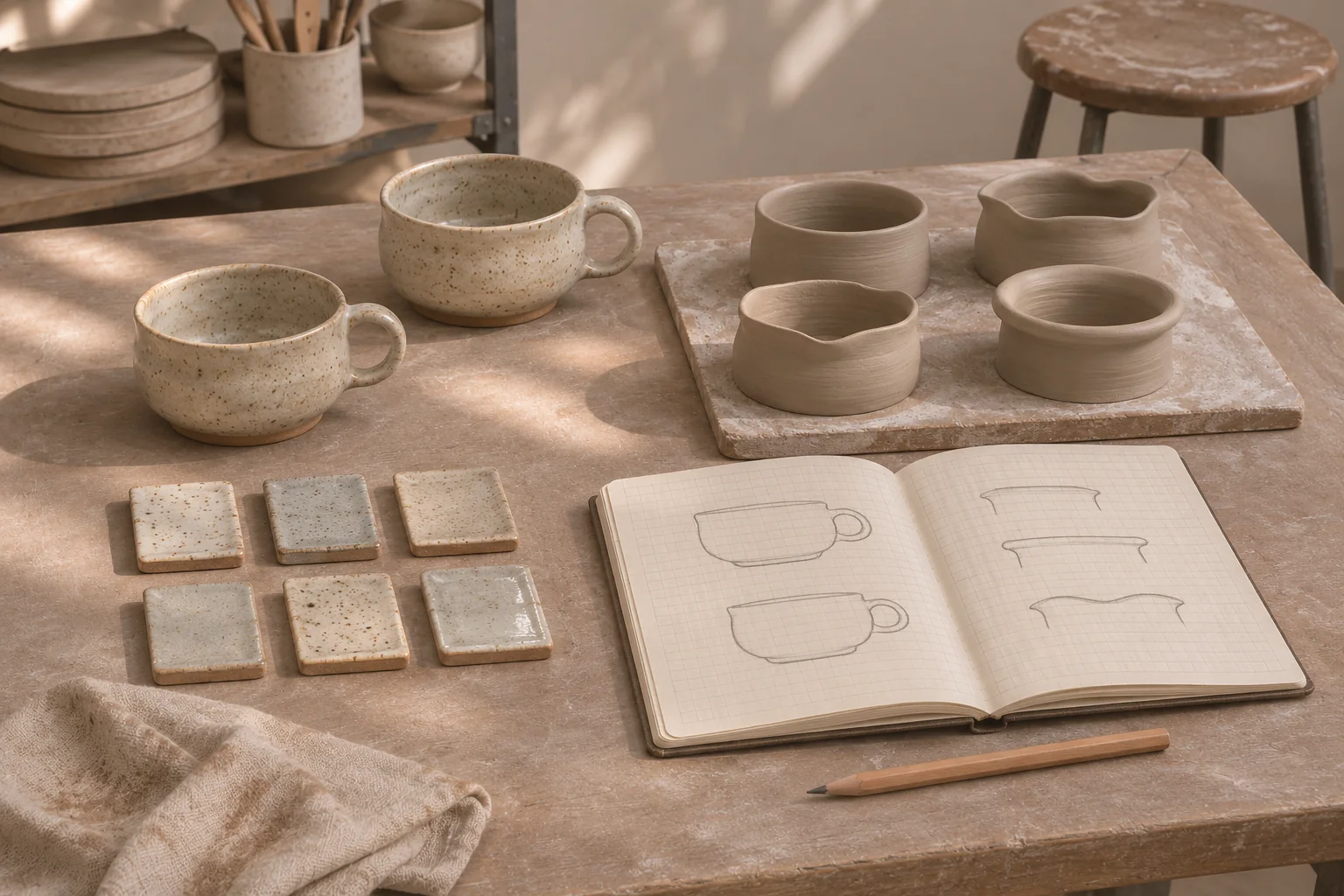
Luis started with drawings of cups and bowls used during an ordinary week. The drawings recorded the position of a thumb, the curve under a rim and the point at which a form became awkward to stack. These observations became a series of small forms made from one clay body.
The value of a test.
Early pieces varied too many details at once. In critique, Luis separated the tests: one group changed the handle, another changed the rim, and a third compared three labelled surfaces. Each piece received a sample number connected to the clay record and the supervised firing log. Failed tests stayed in the notebook because they made the later selection easier to explain.
Read the material record.
A sample number connects a tile to its preparation note and the supervised firing record. The notebook keeps a sketch of the intended rim beside the resulting form. Looking between those records and the finished series makes it possible to ask which difference was planned, which was discovered and why it was retained.
A series, presented.
The presented series places six completed vessels beside a small selection of test pieces. A shelf diagram shows spacing and height, and the wall text distinguishes visual decisions from claims about functional testing. The display does not make food-safety or commercial-production claims.
What comes next.
Luis’s next step is to compare the same group after another round of handling observations. The value of the project lies in the link between a finished object and a record that another student can understand, rather than in the number of objects produced. For the next review, Luis will number the complete objects as well as the tiles and photograph each from the same angle. This will make a rim or handle comparison easier to follow. The series is assessed through its material question, coherent selection and readable evidence, rather than a claim that every object is ready for sale or functional use.
Find your own material question.
See how first-year clay studies become an independent series, then explore the work you could bring to an application conversation.